

N
Natcha P.
2 months ago
The doctor assessed everything in detail and explained each step. The result looks natural — my face looks firmer without looking overdone. Loved the aftercare.

BEHAP WELLNESS CLINIC
Dual-frequency monopolar RF
Firmness and skin-quality care, guided by your physician.
PERSONALISED CARE
ASOKE & BANGNA
6.78 + 2 MHz
Dual-frequency monopolar RF
Firmness & facial contours
Skin quality
Includes a doctor’s consultation · 3D facial scan · Skin-care mask
BANGNA BRANCH · NEAR BKK AIRPORT
BEHAP Wellness Clinic’s Bangna branch is located in Cascade Bangna, approximately 20 minutes by car from Suvarnabhumi Airport, depending on traffic.
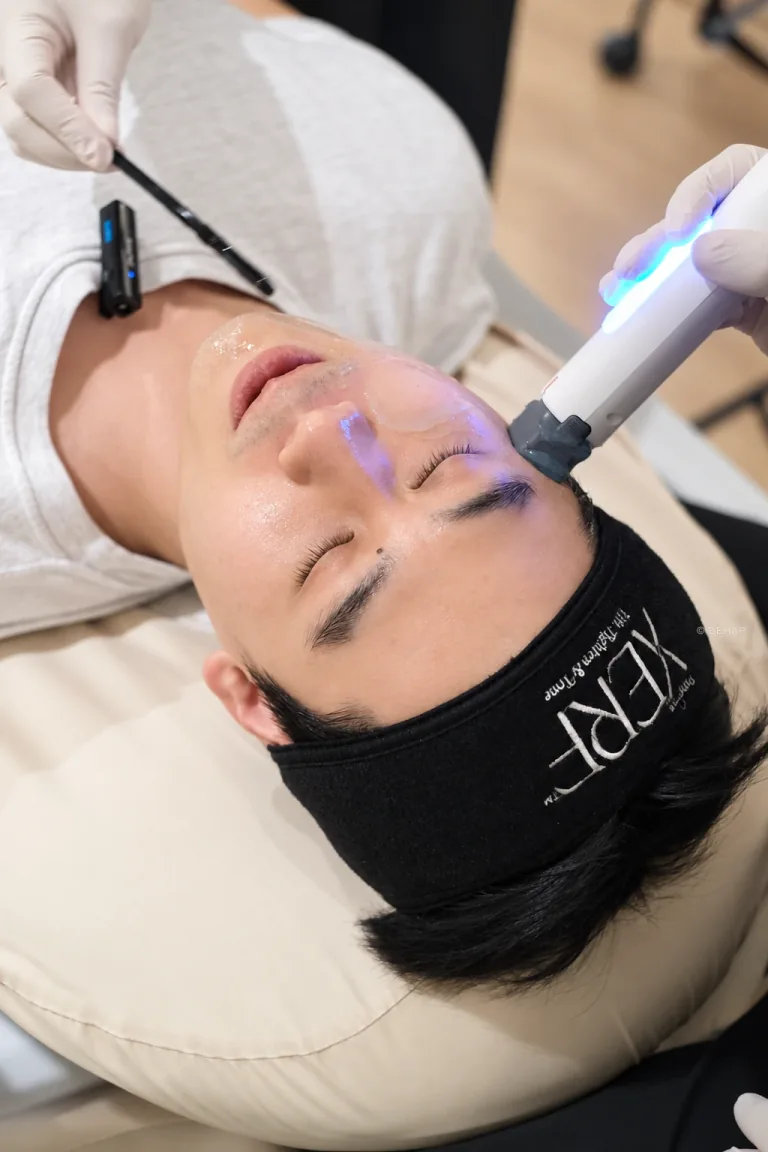
XERF by Cynosure Lutronic is a dual-frequency monopolar radiofrequency (RF) platform. It delivers 6.78 MHz and 2 MHz simultaneously in a single shot, distributing heat across the shallow, middle, and deeper structural layers to help firm skin and support a natural collagen response. No needles and no anesthesia; minimal downtime. Individual results vary.
An Accurate Impedance Feedback system reads your skin in real time and adjusts energy to each area of tissue. At BEHAP Wellness (Asoke and Bangna), every XERF treatment is planned around your individual facial structure, paired with a pre-treatment hydration step.
Since November 2025
As of 1 September 2026
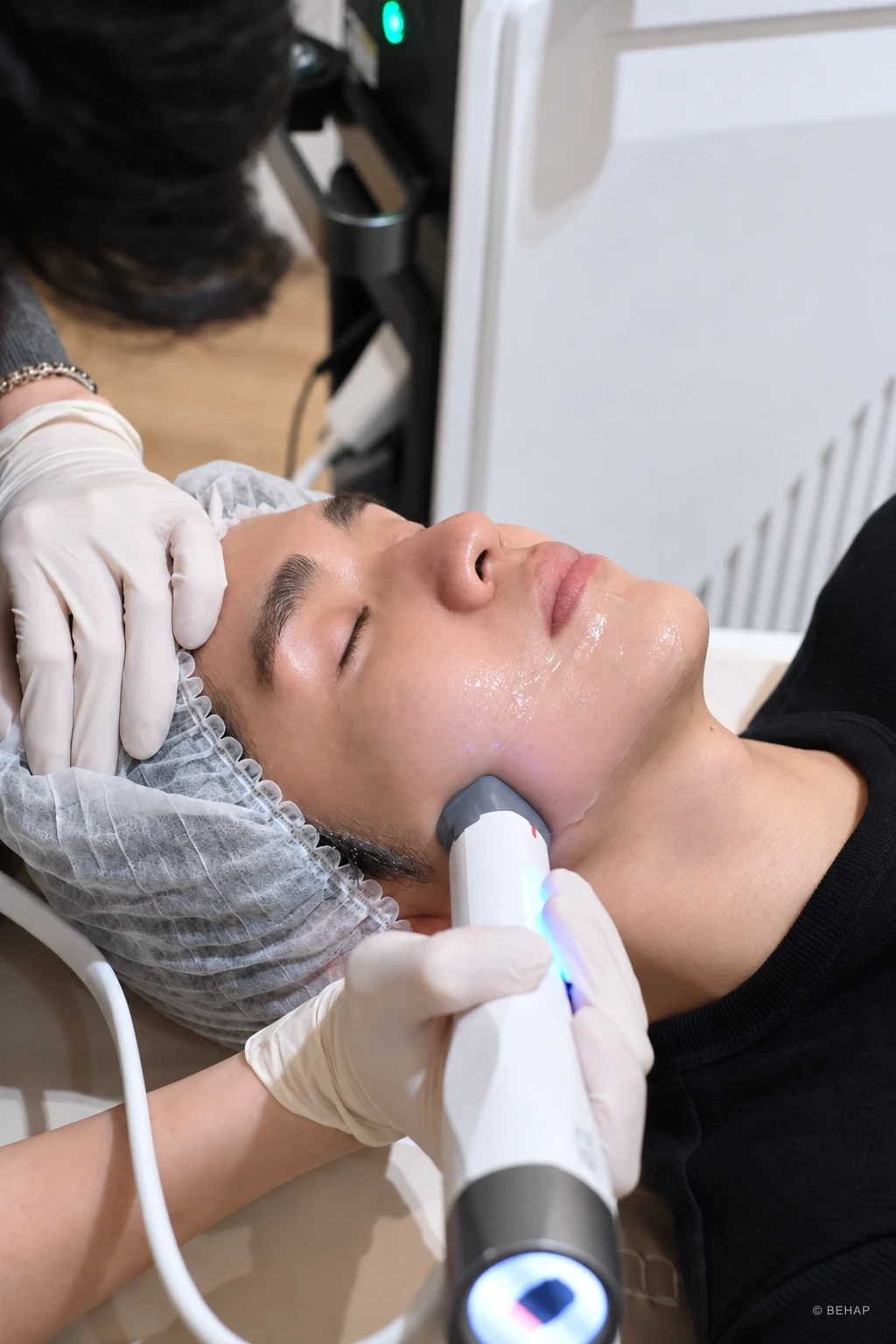
Actual patient photograph, published with consent · Photographed 12 April 2026 · © Behap Medical Co., Ltd. · Edited for presentation.
Treatment suitability depends on a doctor's assessment and results vary per individual · FDA clearance refers to US authorization.
Before XERF, your physician assesses both the areas where you would like more firmness and those where fullness should be retained, then selects treatment locations, depth modes and energy levels for your individual facial structure. For people with a small face or existing hollowing, the plan may avoid certain areas following the physician’s assessment.
Read the physician’s answer: Can XERF reduce baby fat or cause facial hollowing?
Helps support the ligaments that hold facial fat in place, preserving a youthful facial framework.
Structural supportYour physician assesses the areas where you would like more firmness alongside your existing facial volume, then selects treatment locations and settings for the individual.
Reposition, not destroyFindings from the tissue study describe altered adipocyte shape and clearer boundaries, with no cell death observed at the 30-day follow-up.
Adipocyte shape change Source: XERF Clinical Training · p. 12XERF energy helps pores look tighter, skin appear smoother, and the complexion look healthier.
Skin qualityDeveloped by Cynosure Lutronic, XERF is a dual-frequency monopolar RF platform built specifically for structural firming and multi-layer collagen stimulation.
Simplified cheek schematic, not to scale or a treatment result. Anatomy varies by facial region. Arrows compare relative depth, not actual thermal boundaries.
Works from the epidermis into the upper dermis, re-organizing collagen and elastin where fine lines and texture show most — for smoother skin, tighter-looking pores, and a healthier surface.
Reaches the deep dermis, fibrous septa, and the SMAS — the structural layer that defines the jawline and neck — driving long-term collagen production and lift from within.
Delivering two frequencies at once in a single shot is something single-frequency RF can't do — so XERF can address both skin quality and structural firming in one treatment, with the focus on facial balance rather than volume reduction.
Smoother, more radiant-looking skin
Focuses on skin texture by delivering energy to the upper dermis.
Firmer-looking skin
Focuses on tightening and dermal remodelling, with energy reaching tissue around the superficial fat layer.
Lifting and support for skin laxity
Focuses on deeper tissue, such as in the lower face and jawline, according to individual suitability.
When controlled heat reaches the deeper layers, the body responds in two stages — an immediate effect, then a gradual one that builds over time.
Heat causes existing collagen fibers to contract and tighten. Many people notice a subtle firmness right after the first treatment.
Fibroblasts are stimulated to produce new collagen and elastin over the following weeks, so skin gradually becomes firmer, more lifted, and smoother.
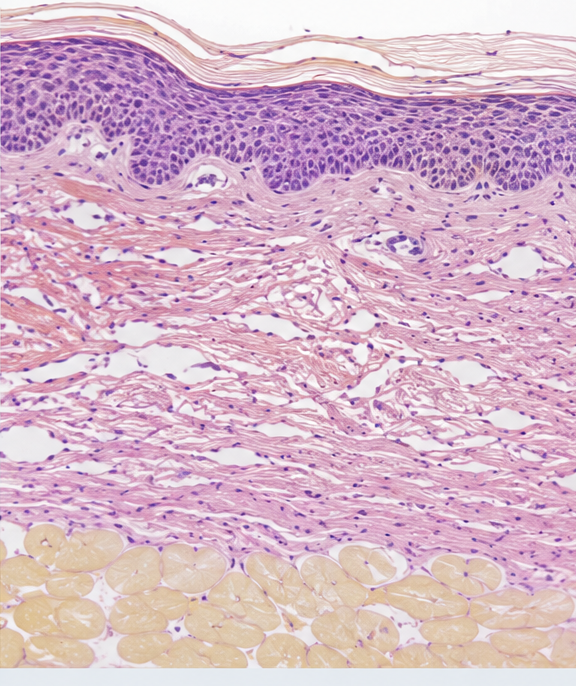
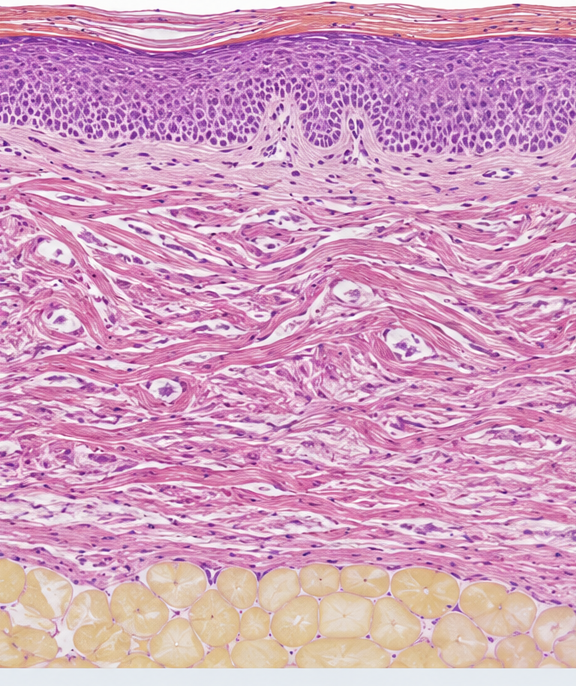
Supporting monopolar RF study (not XERF): Wanitphakdeedecha R, et al. “Efficacy and Safety of Monopolar Radiofrequency for Treatment of Lower Facial Laxity in Asians.” Dermatol Ther (Heidelb), 2022. · View on PubMed
In-vivo studies place target intra-dermal temperatures around 50–70°C while the surface is kept below roughly 43°C by the cooling system · results vary per individual.
We believe in sourcing claims honestly. Below is what the peer-reviewed clinical literature shows — direction, not a guarantee.
Most cited studies investigate monopolar RF as a category (not the XERF device specifically), and some are computational or animal-model work — so the evidence indicates direction, not a guarantee. Individual results vary.
A study in Asian skin (Fitzpatrick III–V) found continuous improvement in lower-face laxity after a single session · average pain ~3/10
Facial and upper-neck laxity improved, strongest at the jowls and melolabial folds
Collagen remodelling was observed without fat-cell death — structural support rather than volume reduction.
Further reading: Goldman et al., Dermatologic Surgery 2025 (collagen increases immediately and continues to build for approximately 6 months) · Austin et al., Lasers in Surgery & Medicine 2021 (review: RF helps improve laxity and elasticity, with good safety). Consult a physician before treatment.
From surface cooling to energy settings, XERF lets your doctor tailor the treatment to you.
Explore the XERF experience through Reels
21 Reels · @behap.clinic & Collab
Videos play through Instagram. If a player is unavailable, open the original Reel. Content reflects the date of each original post; individual results vary.
ICD cools the skin’s surface during energy delivery to help limit heat-related discomfort.
WaveFit spreads energy across multiple pulses for a more gradual rise in tissue temperature.
XERF is designed to work without needles or numbing cream. Your doctor assesses suitability first.
Your doctor selects depth and energy settings for the treatment area and your individual assessment.
Sensations vary. Tell your doctor promptly if you feel too hot or uncomfortable. Results vary between individuals.
Three patient examples from @behap.clinic, with the follow-up timing shown in each original post.
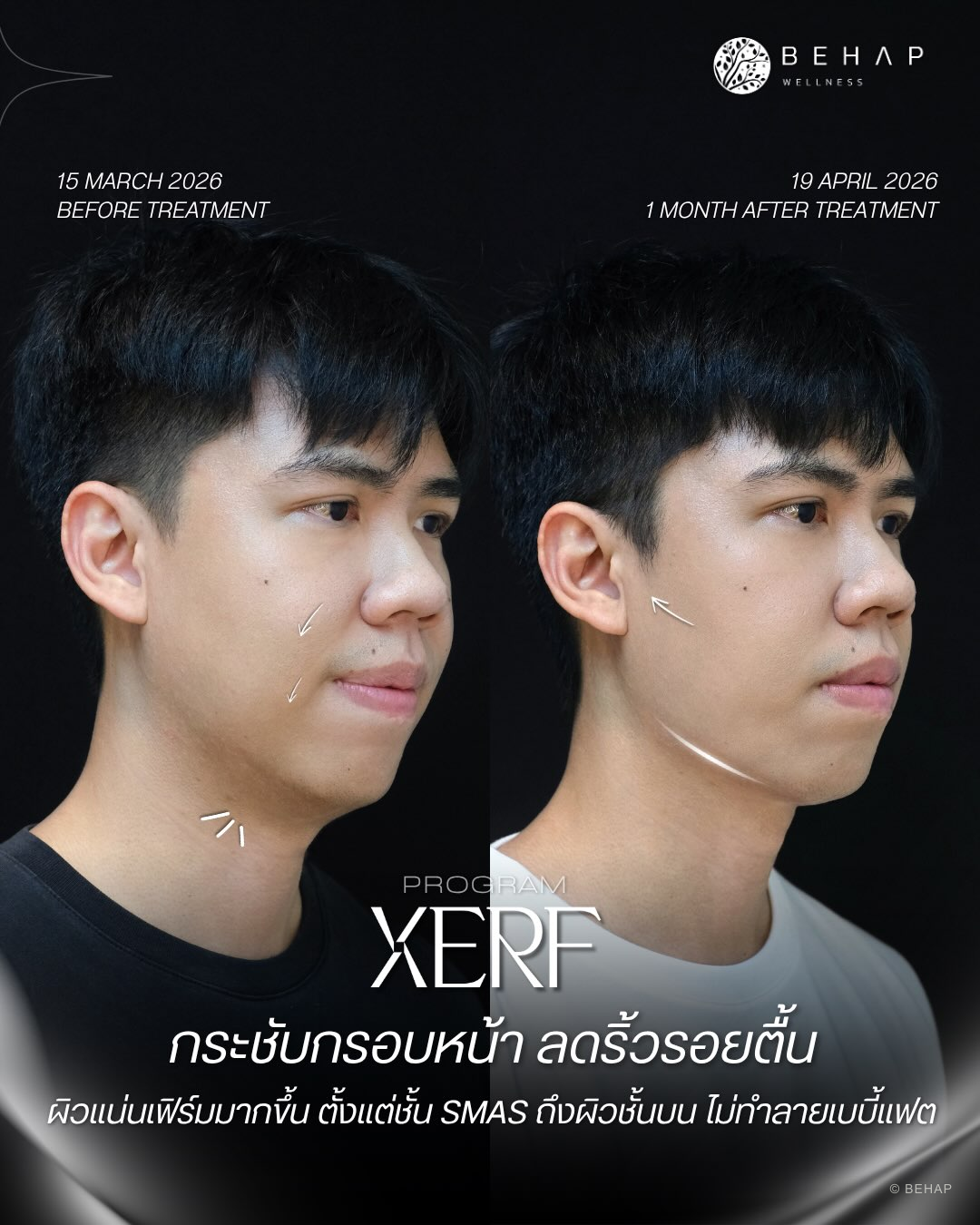
@behap.clinic · Published
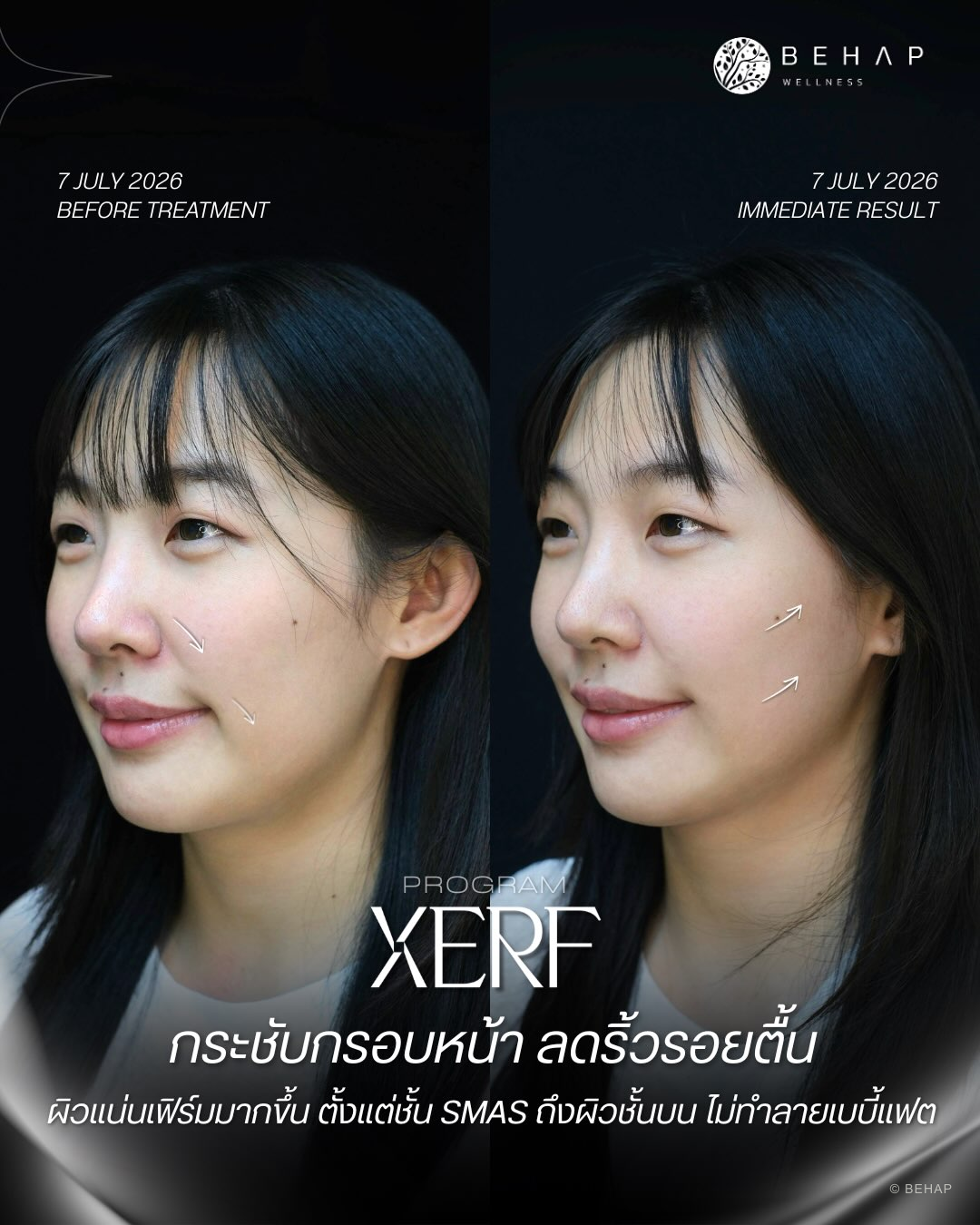
@behap.clinic · Published
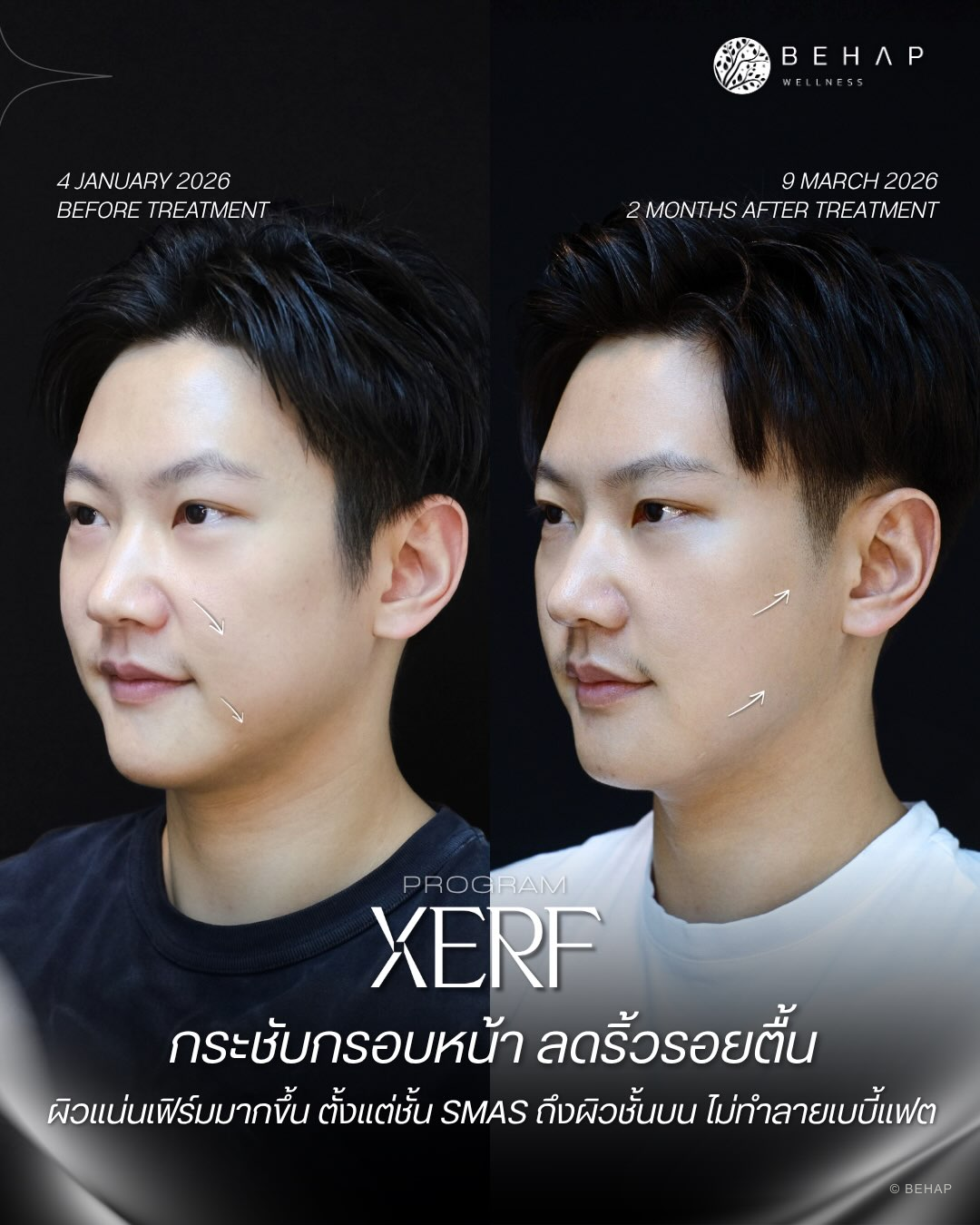
@behap.clinic · Published
Original Instagram images. Dates and follow-up labels are reproduced from the posts. These are different cases, not one person’s progress over time. Results vary; immediate images do not represent the final outcome.
Post 1 / 3XERF may not suit those with severe laxity or significant structural descent that requires surgery. A doctor will assess suitability during your consultation.
A brief clinical summary — the right option depends on your facial structure, degree of laxity, and goals.
| Comparison | XERF | Thermage FLX | Ultherapy PRIME |
|---|---|---|---|
| Energy | Dual-frequency monopolar RF: 6.78 and 2 MHz | Monopolar RF | Microfocused ultrasound with tissue visualization |
| Planning | Shallow, Middle and Deep modes with energy levels tailored by area | Area-specific tips, shot distribution and energy adjustment | Ultrasound imaging helps identify tissue layers and select 1.5, 3.0 or 4.5 mm transducers |
| Goals considered | Firmness, skin quality and jawline definition with a multi-depth plan | Firmness, smoothness and wrinkles through heating collagen-rich tissue | Lifting with focused energy placed in tissue layers seen on imaging |
| During treatment | Impedance feedback and cooling coordinated with energy delivery | Adaptive energy delivery, cooling and vibration for comfort | Real-time imaging to check location and transducer contact |
BEHAP's doctors design a treatment plan around your individual structure — not a one-size-fits-all formula.
Shot allocation starts with the intended result. The physician assesses the skin and facial structure, then plans treatment area, depth mode, energy level and passes together.
The physician considers area, depth mode, energy and passes together, allocates sufficient shots for the plan, and monitors delivered energy during treatment.
Just as Ultherapy displays tissue images during treatment, XERF displays parameters that help the physician monitor energy delivery.
The physician uses the displayed energy, skin temperature and cooling information alongside patient feedback to adjust treatment as it proceeds.
Hydration relates to the skin’s electrical properties. The physician assesses and prepares the skin, monitors impedance and adjusts energy during treatment, with the aim of maximizing results and value for each patient through an appropriate treatment plan.
Physicians at BEHAP Wellness Clinic tailor the use of Stamp & Glide to each patient, choosing placement, treatment direction and passes according to facial structure and the areas being addressed.
References: [1] · [2] · [11] · [14]
Read the full BEHAP methodDoctor-assessed · not surgery · results vary between individuals and are not permanent · not everyone is suitable; a physician assesses suitability first.
Ranking by AESLA.
Physician-led care, from consultation through follow-up.
See XERF during treatment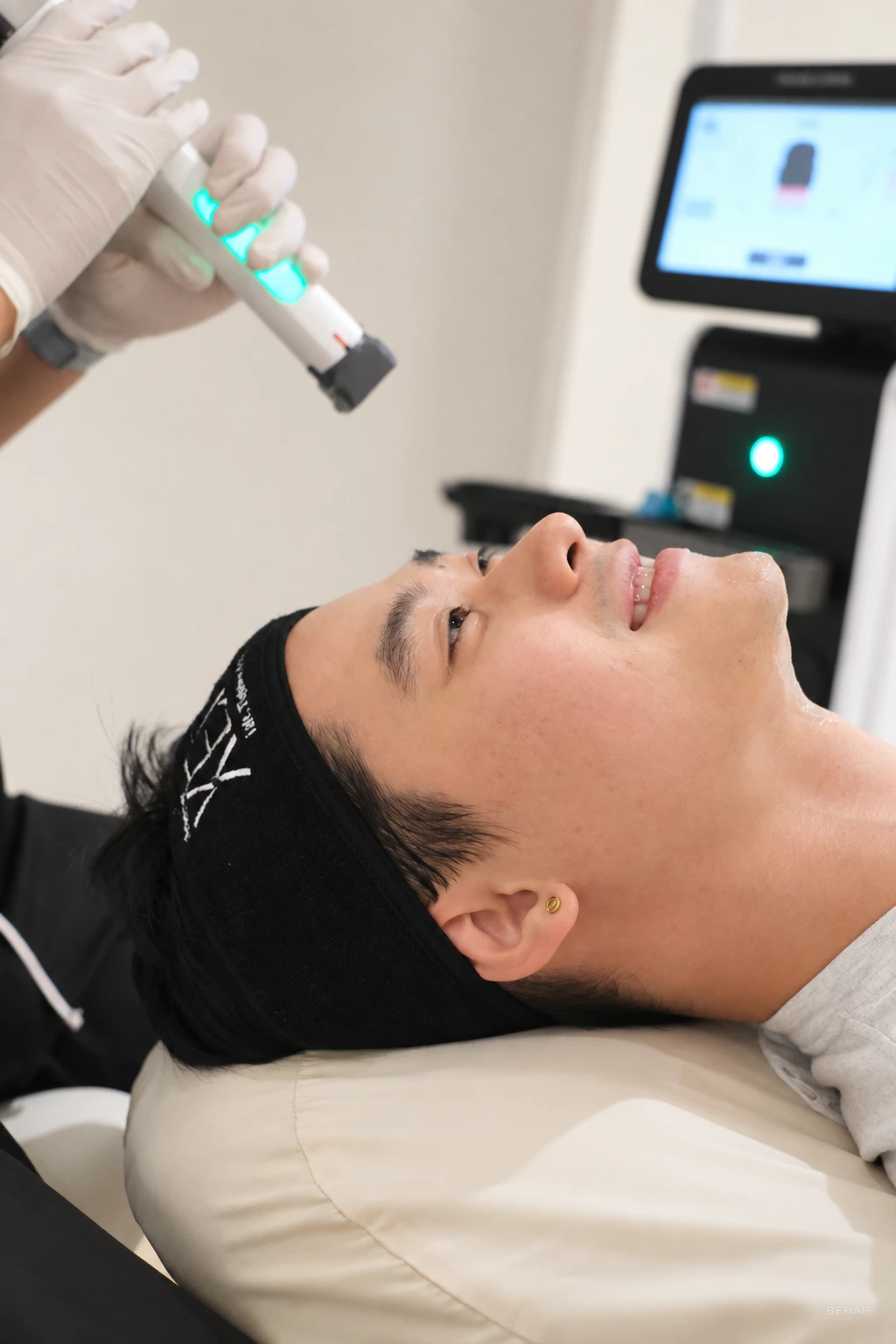
Actual patient photograph, published with consent · Photographed 7 June 2026 · © Behap Medical Co., Ltd. · Edited for presentation.
Agree on your goals and treatment areas with your doctor. Before starting, understand the plan, shot allocation and what the treatment can realistically achieve.
Your doctor assesses both the areas you want to tighten and those where fullness matters, then selects treatment locations and settings to suit your facial structure.
We assess hydration and irritation, prepare your skin as appropriate and monitor impedance during treatment.
Your doctor follows both the device readings and how you feel. Tell us straight away if an area feels hot or uncomfortable so energy and cooling can be adjusted.
We assess progress against the goals you agreed on and explain whether to allow more time, consider further treatment or adjust your plan.
Results develop gradually, with the main review around three months. In BEHAP’s experience, 6–12 months is a window for reassessment and ongoing care planning. The physician reviews the previous result, skin condition and goals before recommending further treatment. Read about duration and repeat treatment
Available now at BEHAP Wellness Clinic.
At BEHAP Wellness Clinic
Approximately THB 81.67 per shot
THB 49,000 is the minimum price under the clinic’s MOU with AESLA, the distributor in Thailand.
The XERF fee at BEHAP includes a doctor’s consultation, a 3D facial scan and a skin-care mask.
Your physician assesses the treatment areas and allocates the shots with you, considering area, depth mode, energy level and passes. Read the planning examples in “What is the difference between 300 and 600 shots? Is more better?”
BEHAP aims to set prices that appropriately reflect the costs of medical care, including staff, equipment, assessment and ongoing care, while honouring its agreement with the distributor. We explain the scope of service and the cost before you decide.
Through individualised care and clear information, we aim to contribute to good standards in Thailand’s aesthetic clinic sector and help you understand the treatment plan you choose.
Alongside price, compare shot counts, treatment areas, the device and tips used, the treating physician and aftercare. Check promotional conditions and additional charges so you know what each offer covers.
Reports of counterfeit aesthetic devices being used in Thailand have surfaced from time to time. Before treatment, verify the device, treatment tips and provider directly with the official distributor, especially if the quoted price differs substantially from the stated price benchmark.
Price alone cannot establish whether a device is genuine. If you have concerns, ask the clinic for documentation showing where the device and treatment tips were sourced, and confirm the details directly with the distributor before deciding.
Individual treatment design is key. Facial anatomy, tissue thickness and existing fat volume differ. XERF offers adjustable depth modes, energy levels and applicators; the physician decides how to use them in each area.
XERF should not be applied identically across every face. A smaller-looking face and hollowing are different concerns. BEHAP plans firmness around your facial structure and preferences.
The shot count starts with the result you want. You may want a more defined jawline or firmness across several facial areas. The physician assesses your skin and facial structure and designs treatment around four factors.
These are consultation examples, not fixed standards or a manufacturer protocol.
| Shot count | Potential goal | Example |
|---|---|---|
| 300 shots — focused areas | Limited coverage where the physician considers the allocation sufficient | Jawline and lower cheeks without spreading treatment across the entire face |
| 600 shots — broader coverage | Several areas, overall firmness, or a plan requiring additional passes | Cheeks, jawline and under the chin, with extra allocation where clinically appropriate |
One month is not too early to assess progress, but it is early to judge the full outcome. RF produces thermal changes in collagen followed by new collagen formation and tissue remodeling. Changes can develop gradually over weeks to months. We plan the main review at approximately three months.
Start with the original goal: skin quality, jawline definition or another concern. Compare against what was intended, using photographs with similar lighting, angles and expression.
After reviewing the goal and response, consider the following options.
| Option | What to consider | Next step |
|---|---|---|
| Continue follow-up | Still within the first month, no unusual symptoms, and too early to judge the full outcome | Review around month three with consistent lighting, angles and expression |
| Treat again as planned | Laxity remains suitable for RF and further treatment is expected to offer a clear benefit | Specify the area and goal, then adjust area, depth, energy and passes |
| Change approach or stop additional treatment | The main concern is not laxity, the goal exceeds tightening alone, or there is no clear benefit at the main review | Reassess the cause and expectations, then choose a better-matched approach or stop further procedures |
Record factors that may affect assessment, including weight gain or loss and other procedures.
Allow the previous procedure to start taking effect and post-treatment symptoms to settle first. Suggested review periods differ:
These are review periods for the previous procedure, not automatic clearance for XERF. XERF training lists neurotoxin or filler injections within four weeks as a precaution. The physician must consider the product, location and recovery before scheduling. Training p. 28
If swelling, redness, pain, substantial bruising or unusual symptoms remain, postpone XERF and consult your treating physician.
Tell the team what you had, when, and where, so treatments are appropriately sequenced and the previous result can be assessed clearly.
References: [2]
If loose skin after weight loss is the main concern, the physician can consider XERF for firmness. The area and degree of laxity must be assessed against what treatment can achieve.
Our XERF goals are firmer, healthier-looking skin. If the main goal is fat removal or volume reduction, the physician considers a more appropriate approach.
| Concern | BEHAP approach |
|---|---|
| Loose skin after weight loss | Assess XERF and tailor the plan to the skin and treatment area |
| Excess fat with firm skin; a wish to reduce thickness or size | XERF is not our first choice. Assess fat-management and contouring options, such as the Ignite Quantum program, with the physician explaining which steps are needed for the volume goal |
| Substantial excess skin or a major size-change goal | Assess other options because tightening alone may be insufficient |
The physician considers fat volume, skin laxity and the change you want before selecting a program.
QuantumRF involves an instrument beneath the skin, so its procedure and recovery require separate consideration from XERF. The cited XERF clinical evidence on this page concerns the face and neck; body use requires area-specific assessment.
Treatment can generally be performed without numbing cream. In BEHAP’s clinical experience, most patients describe comfortable warmth rather than pain during treatment.
If any area feels hot or uncomfortable, tell the physician immediately; you do not need to endure it. Energy and cooling can be adjusted to the area and your sensations while keeping the treatment goal in mind.
At BEHAP, your experience during treatment matters as much as the result we plan for. We want XERF to feel comfortable during treatment and reassuring when you return for care.
We want your skin to be healthy and ready before treatment. The physician assesses dryness, hydration and irritation. If the skin is not ready, we plan skin care first.
Hydration is related to the skin’s electrical properties, including impedance, or opposition to alternating current, which is relevant to RF energy delivery through tissue. XERF’s Accurate Impedance Feedback reads tissue electrical properties during treatment to help the system adapt energy delivery.
At BEHAP, skin preparation is part of treatment design. We consider skin readiness, treatment areas, energy levels and your comfort throughout, tailoring each step to you.
Attention to the details before treatment is part of the care we want you to experience with XERF at BEHAP.
XERF results can develop gradually after treatment. Studies report changes in firmness and skin quality through approximately three months, making this an important time to compare with baseline and assess the original goal.
In BEHAP’s clinical experience, 6–12 months is an important window for reassessment and planning repeat treatment. In suitable patients, we have observed good results with continued care, and some show additional change with an overall result that appears better than after the first treatment. This is a clinical observation, not a conclusion from a comparative study of repeat treatment at this interval.
Before the next treatment, the physician reviews how much firmness remains, which areas need further attention, and changes in your skin or facial structure to tailor the next plan.
References: [2]
You can generally return to work and daily activities after treatment. Mild pinkness, warmth or swelling may occur initially. Focus on hydration and minimizing irritation.
Contact the clinic promptly if burning pain, redness or swelling increases, or blisters develop. The physician can assess and provide appropriate care.
All three address laxity, but their energy delivery and treatment-planning tools differ. The physician starts with the change you want and assesses your skin and facial structure.
| Comparison | XERF | Thermage FLX | Ultherapy PRIME |
|---|---|---|---|
| Energy | Dual-frequency monopolar RF: 6.78 and 2 MHz | Monopolar RF | Microfocused ultrasound with tissue visualization |
| Planning | Shallow, Middle and Deep modes with energy levels tailored by area | Area-specific tips, shot distribution and energy adjustment | Ultrasound imaging helps identify tissue layers and select 1.5, 3.0 or 4.5 mm transducers |
| Goals considered | Firmness, skin quality and jawline definition with a multi-depth plan | Firmness, smoothness and wrinkles through heating collagen-rich tissue | Lifting with focused energy placed in tissue layers seen on imaging |
| During treatment | Impedance feedback and cooling coordinated with energy delivery | Adaptive energy delivery, cooling and vibration for comfort | Real-time imaging to check location and transducer contact |
For XERF at BEHAP, we consider AREA × DEPTH × ENERGY × PASSES, together with skin preparation and your comfort during treatment.
Ask: “How will this plan address my concern?” Your physician should explain this before treatment.
Disclose medical conditions, medicines, implanted devices or materials, and previous procedures before XERF. Some are contraindications; others require individual assessment or postponement.
| History or condition | Before booking |
|---|---|
| Implanted pacemaker, defibrillator or other electrical device | Tell the clinic before booking, as RF may interfere with the device Training p. 27 |
| Pregnancy or breastfeeding | Defer XERF during this period Training p. 27 |
| Permanent filler or facial implant in the treatment area | Tell the physician the type and location; training lists this as a contraindication in the relevant area Training p. 27 |
| Infection in the treatment area or pathological abnormalities requiring diagnosis | Assess and address the condition before XERF Training p. 27 |
| Conditions that may impair peripheral nerve function | Tell the physician; training cites diabetes and multiple sclerosis in the context of nervous-system impairment Training p. 27 |
| Facelift surgery within two months | Do not receive XERF during this period Training p. 27 |
Training also lists unrealistic treatment expectations. The physician should explain the limits and agree on appropriate goals before starting. Training p. 27
These are precautions, not an automatic exclusion for everyone with these histories.
| What to disclose | Details for the physician |
|---|---|
| Botox or filler | Tell the physician the product, location and date; injections within four weeks are a precaution Training p. 28 |
| Fat grafting or skin grafts | Especially in the treatment area within six months Training p. 28 |
| Metal implants | Tell the physician their type and location; even metal outside the current pathway requires caution Training p. 28 |
| Medical conditions or ongoing treatment | Including cancer, autoimmune or connective tissue disease, hypertension, epilepsy, acute illness, uncontrolled diabetes or lesions associated with radiotherapy or chemotherapy Training p. 28 |
| Blood disorders or regular medicines | Especially aspirin, anticoagulants and long-term anti-inflammatory medication; the physician must review use before treatment Training p. 28 |
| Allergies to medicines, medical adhesives or corn | These may be relevant to medication, the return pad or coupling-gel ingredients Training p. 28 |
| Recurrent herpes, keloids, tanned or sun-damaged skin | The physician assesses the skin and any preparation needed Training p. 28 |
| Recent or cosmetic tattoos in the treatment area | Tell the physician the location and date Training p. 28 |
Tell the physician if you cannot follow pre- or post-treatment instructions so the plan can be adapted. Training p. 28
If you are unsure whether your history is relevant, contact the team before booking. The document states that this list cannot cover every condition and recommends expert medical assessment when in doubt. Training p. 27
References: [2]
In-depth, doctor-reviewed guides — written to help you decide on accurate information, not hype.
The complete guideA plain-language explainer on dual-frequency RF — how 6.78 MHz and 2 MHz work across skin layers, and who it suits.
Read articleThe BEHAP MethodSame machine, different result — impedance, parameter visibility, and the Stamp & Glide technique explained.
Read articleConcernsCan XERF cause facial hollowing? How physicians plan for different facial structures.
Read article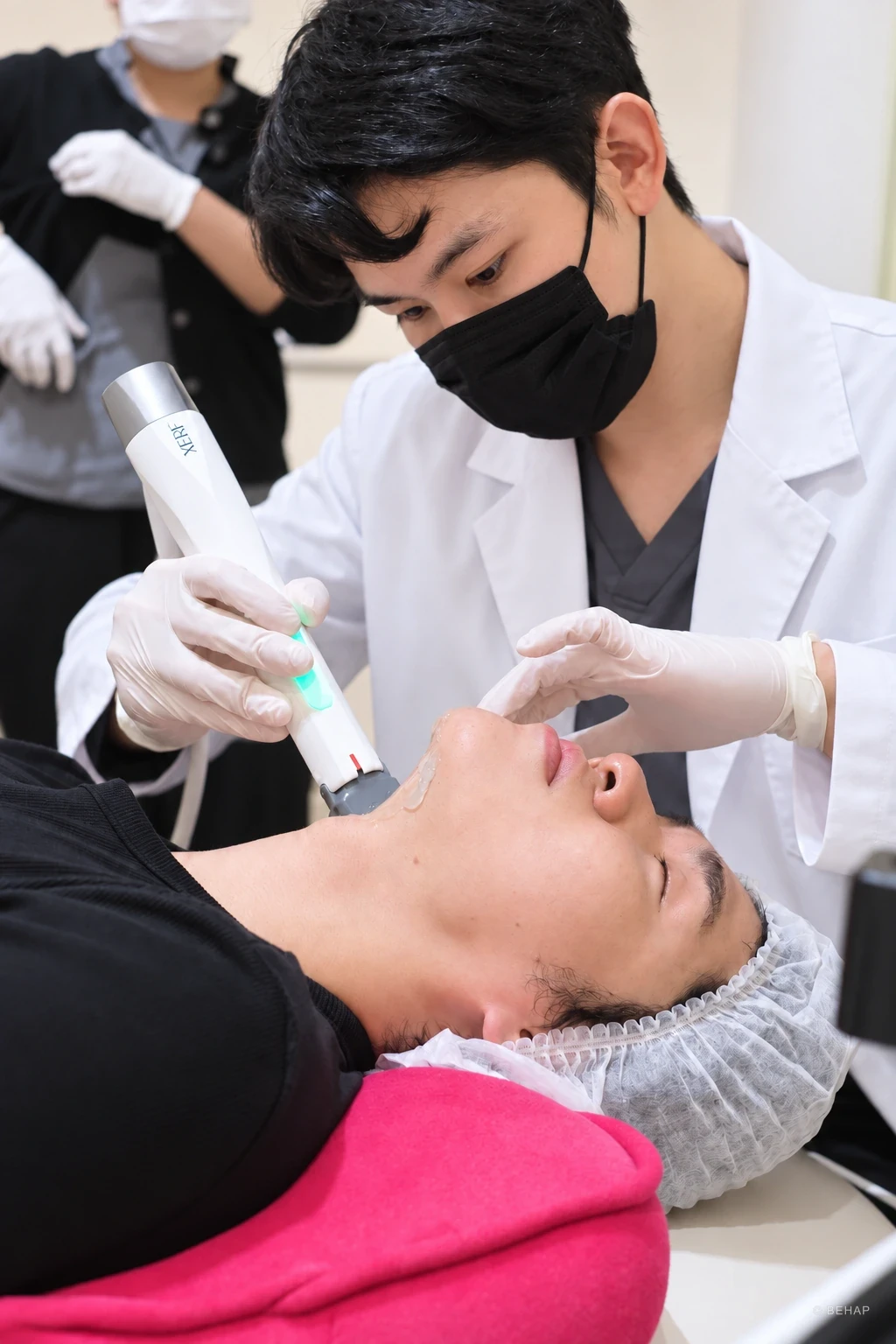
Actual patient photograph, published with consent · Photographed 12 April 2026 · © Behap Medical Co., Ltd. · Edited for presentation.
All physicians at BEHAP have completed XERF training both within the clinic and with AESLA, the distributor in Thailand.
Before treatment, your physician assesses your skin, facial structure and goals to plan the treatment areas, depth modes, energy levels and shot allocation. The proposed plan is explained before you decide.
The doctor assessed everything in detail and explained each step. The result looks natural — my face looks firmer without looking overdone. Loved the aftercare.
I came in about sagging along the jawline. They recommended exactly what I needed, no upselling. It feels firmer now and the collagen effect is really good.
I already have a slim face and worried about looking hollow. The doctor explained XERF firms without reducing fat. Very happy — sharper jawline but still natural.
Reviews from real patients · individual results vary. Consult a doctor before treatment.
Whether you're Thai, an expat living in Bangkok, or traveling here for treatment, we'll take care of you with a consultation experience designed around you.
Consultations available in Thai and English
Asoke: B1 floor, Jasmine City, Sukhumvit 23 — near BTS Asoke / MRT Sukhumvit
Bangna: 14/43 Cascade, Bangna
Individual results vary. Consult a doctor to assess suitability before any treatment.
Sources are grouped here with their scope: human studies, experimental work and manufacturer documents answer different questions.
Platform, frequencies, three depth settings, ten intensity levels and Accurate Impedance Feedback.
Manufacturer training: p.12 adipocyte observations; p.13 modes; pp.16–17 RF/cryogen cooling; p.20 five sensors and 43°C surface threshold; pp.27–28 contraindications and precautions; p.31 preparation; p.34 impedance; pp.38–39 follow-up and aftercare.
Manufacturer brochure: p.4 depth settings; p.7 Wave Fit Pulse; p.8 ICD and RF cutoff above a 43°C surface temperature.
Page 12 describes up to 12 RF sub-pulses accompanied by cooling gas; p.14 covers surface temperature and impedance monitoring. Not every shot necessarily uses 12 pulses.
Retrospective study of 16 women with formal 3-month follow-up. Treatment Protocol describes automatic RF interruption above 43°C surface temperature. 3D surface measurements do not directly measure adipocytes.
Computational and porcine work on mechanisms and adipocyte assays under experimental conditions. Methods describe parallel-contact gas-cooling bursts.
Study of 39 participants receiving 2 treatments, assessed 30 and 90 days after the final session. No control group; these are not BEHAP success rates.
Animal histology supporting mechanism discussion; read with the 2026 correction.
Corrects disclosure of authors’ manufacturer relationships; relevant when assessing the evidence.
US clearance documentation from 2025 for its stated indications; not Thai device registration.
Ultherapy manufacturer information on ultrasound and tissue visualization; not evidence of superiority between devices.
Distributor material: p.11 presents an example of contour change, not a measurement of adipocyte size.
Manufacturer information on RF, treatment tips and comfort features; not a head-to-head study with XERF.
Study of hydration and skin electrical properties; not evidence that preparation improves XERF outcomes.
Provider aftercare guidance for makeup and activity; not a clinical trial.
Manufacturer describes minimally invasive soft-tissue contraction; does not establish fat-reduction outcomes for a BEHAP program.
© Behap Medical Co., Ltd. Reuse, republication or advertising use of BEHAP-owned photographs requires prior written permission, except where permitted by law. Third-party images retain their original rights holders and credits.
For image permission enquiries: behapwellness.clinic@gmail.com