

Before XERF, your physician assesses both the areas where you would like more firmness and those where fullness should be retained, then selects treatment locations, depth modes and energy levels for your individual facial structure. For people with a small face or existing hollowing, the plan may avoid certain areas following the physician’s assessment.
Read the physician’s answer: Can XERF reduce baby fat or cause facial hollowing?
In short
- The physician assesses both laxity and existing facial volume before planning treatment.
- Treatment locations, depth modes and energy are selected for the areas to be addressed.
- People with a small face or existing hollowing need an individual suitability assessment.
Before treatment
Assessing firmness alongside facial fullness
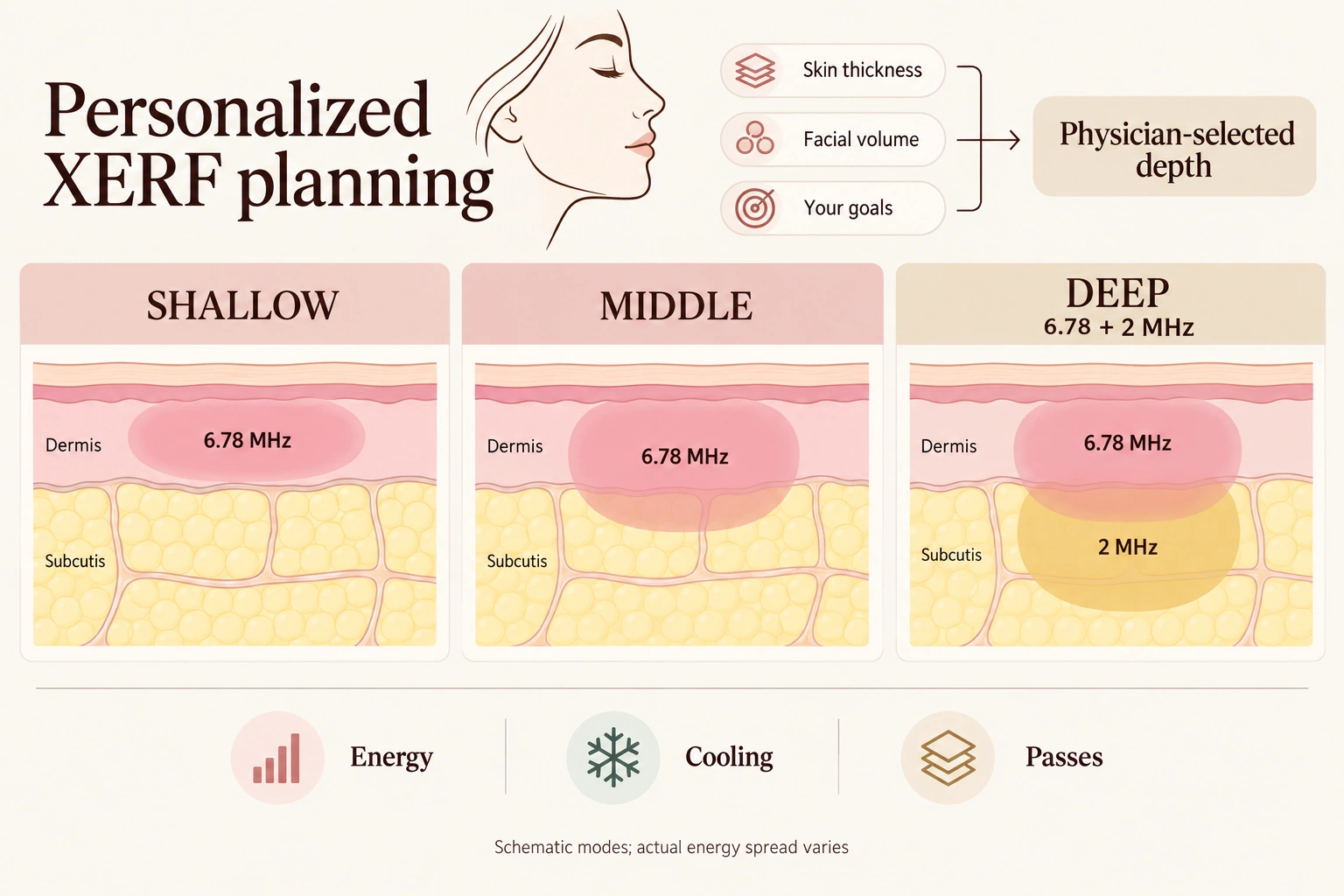
Facial structure, tissue thickness and existing fat volume differ between individuals. The physician therefore distinguishes areas where firmness is wanted from those where fullness should be retained, and plans treatment around your goals.
The physician assesses skin thickness, existing facial volume and treatment goals, then selects depth mode and adjusts energy, cooling and passes for the individual.
The approach
XERF takes a structural approach
XERF offers Shallow, Middle and Deep modes for the physician to select alongside energy levels and treatment tips. Mode selection is one part of an individual plan that considers the care needed in each area.
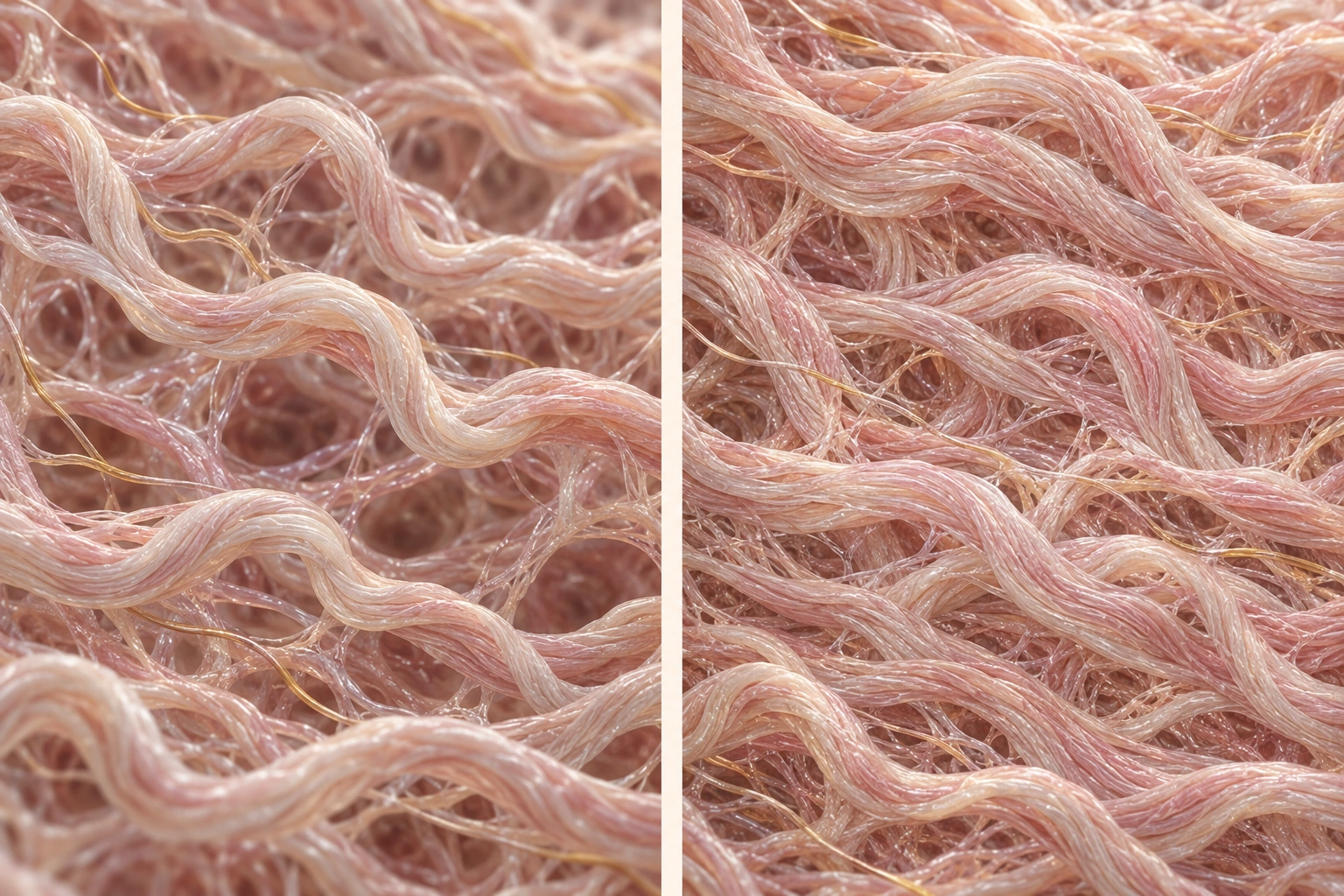
A magnified conceptual comparison of a looser network with contracted collagen bundles and a more compact remodelled network.
BEHAP aims to plan firmness around your facial structure and preferences.
Your treatment plan
How BEHAP plans with facial fullness in mind
Before treatment, your physician assesses your skin, facial structure and goals to plan the treatment areas, depth modes, energy levels and shot allocation, and explains the plan before you decide.
If you have a small face, hollow cheeks or low volume, your physician gives particular attention to areas where fullness should be retained and may avoid some areas as appropriate. This planning does not guarantee an outcome; results vary between individuals.
What the evidence shows
What the lab data actually suggests
Laboratory and computational studies of dual-frequency RF found new collagen and elastin formation in the dermis and the fibrous septa that support facial fat. Importantly, no destruction of fat cells (adipocytes) was observed. The mechanism observed was structural reinforcement rather than fat reduction.
| Observed in lab / computational study | What it means for you |
|---|---|
| 2 MHz → broader, deeper heating near fat | Reaches the supporting structure, not just the surface |
| 6.78 MHz → focused along fibrous septa | Reinforces the "scaffolding" that holds fat in place |
| Collagen & elastin remodelling | Firmer, better-supported tissue over time |
| No fat-cell destruction observed in the models studied | This finding does not guarantee that every patient will avoid facial volume loss. |
One honest caveat: these findings are preliminary — largely computational and animal-model — and await confirmation in larger human studies. They explain the design intent rather than guarantee an outcome, and your doctor assesses your own suitability.
Can XERF cause facial fat loss?
XERF is a structural device; its mechanism realigns and supports fat compartments rather than destroying them. Individual responses are assessed by your doctor.
Can I have XERF if my face is thin or naturally lean?
Lean faces are often good candidates precisely because XERF tightens without targeting volume. Your doctor confirms suitability.
Will I look 'done'?
The intended result is natural firmness and contour, built progressively over 1–3 months — not a sudden, obvious change.

Worried about hollowing? Ask our doctors
Every plan begins with a structural facial assessment and an honest recommendation — in clear English or Thai. No fixed templates, no pressure.
LINE @Behapwellness · Asoke 096-549-4693 · Bangna 092-391-9466