
Do you want smoother skin,
or firmer skin than before?
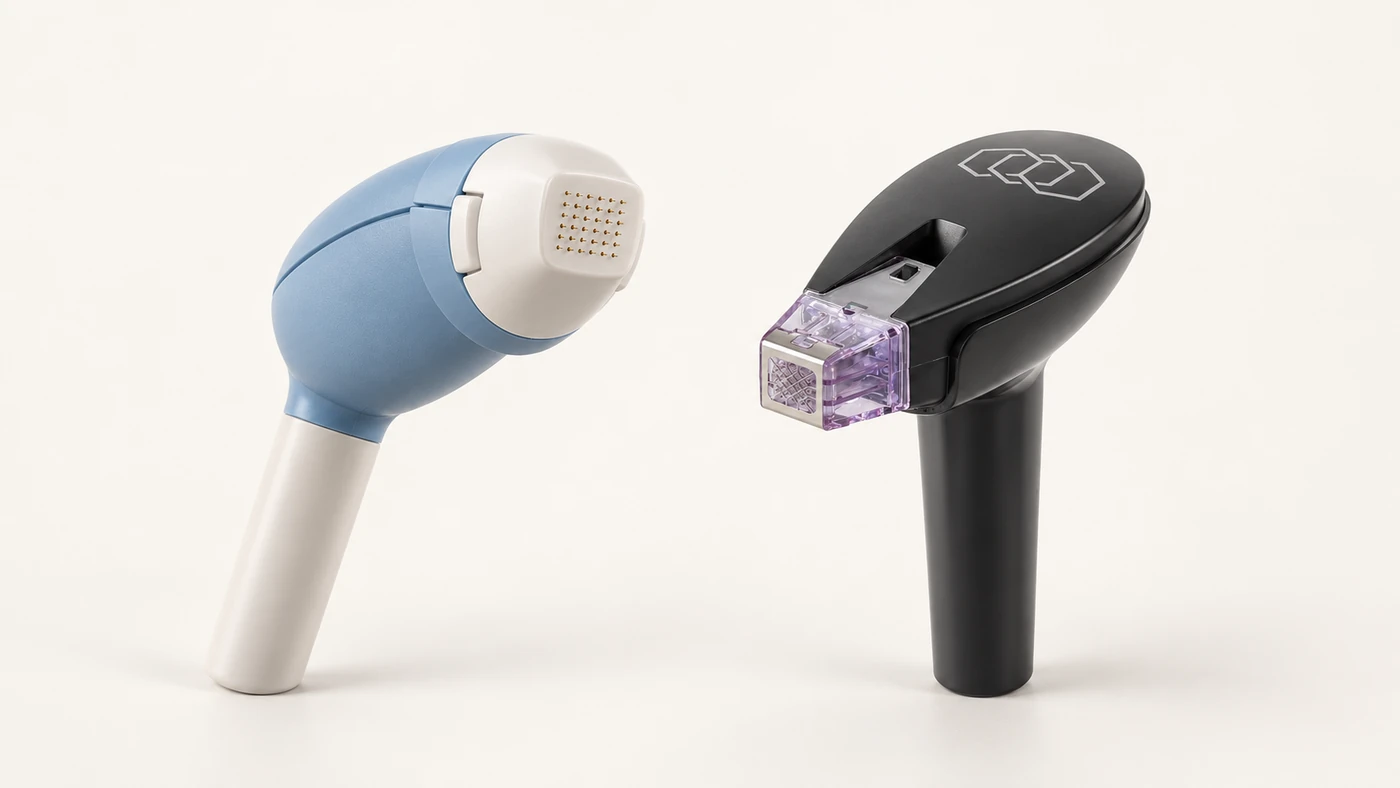
When you start researching, you may come across both EXION Fractional RF and Morpheus8 Burst, along with terms like Monopolar, Bipolar, AI or energy delivered at multiple depths — and wonder what any of it means for your skin.
Both programmes are RF microneedling: fine needles deliver radiofrequency energy into the skin, creating heat in the treatment area and stimulating collagen remodelling. Both can therefore address smoothness, fine lines and firmness. What differs is how they deliver the energy.[2][3]
When does a doctor choose each programme?
Uneven texture, acne scars or fine lines
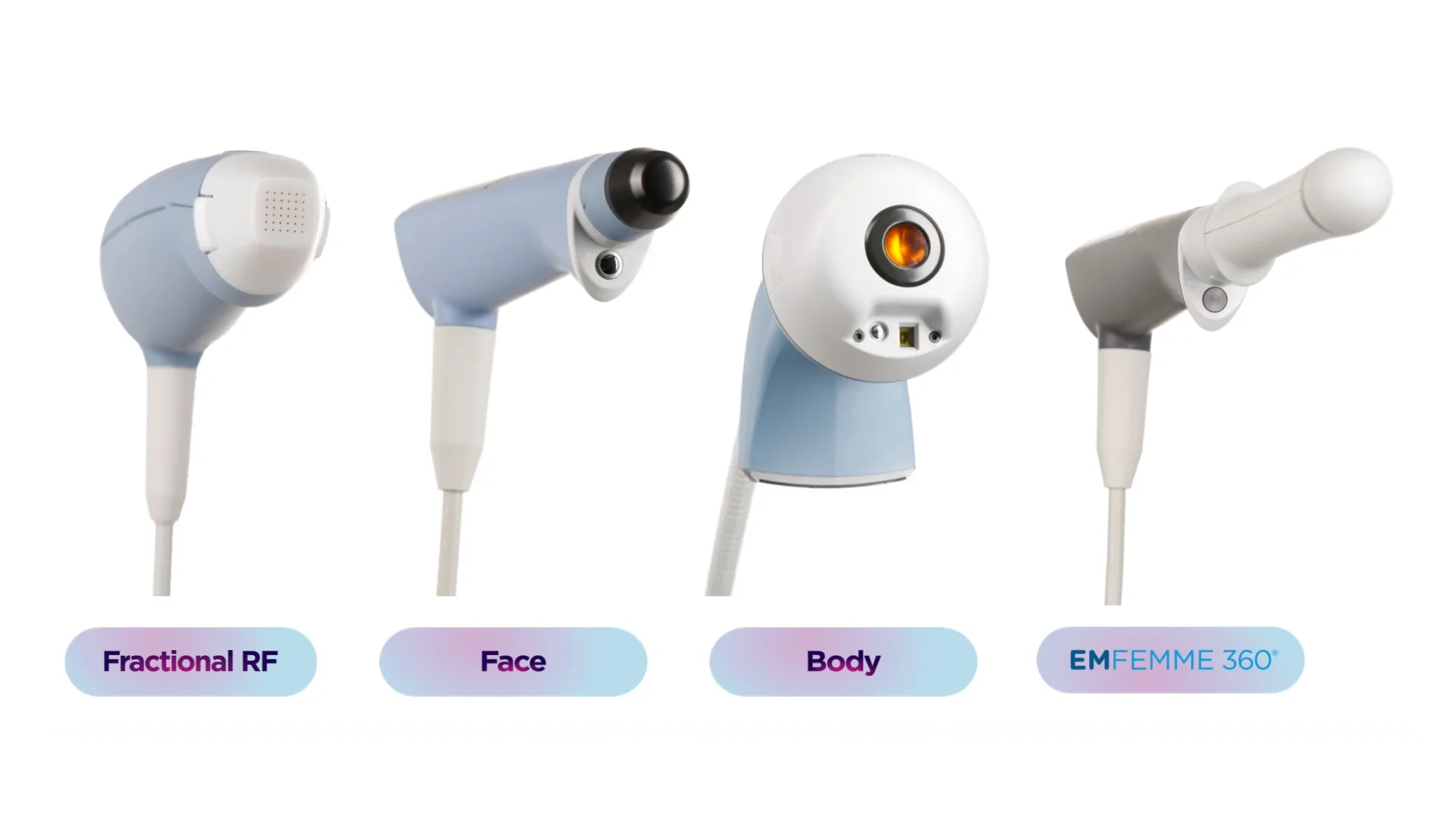
Doctors consider EXION Fractional RF, which controls energy delivery according to how the tissue responds, together with a Single-pass approach — covering the target area once in that session.[3]
Loose skin you would like to look firmer
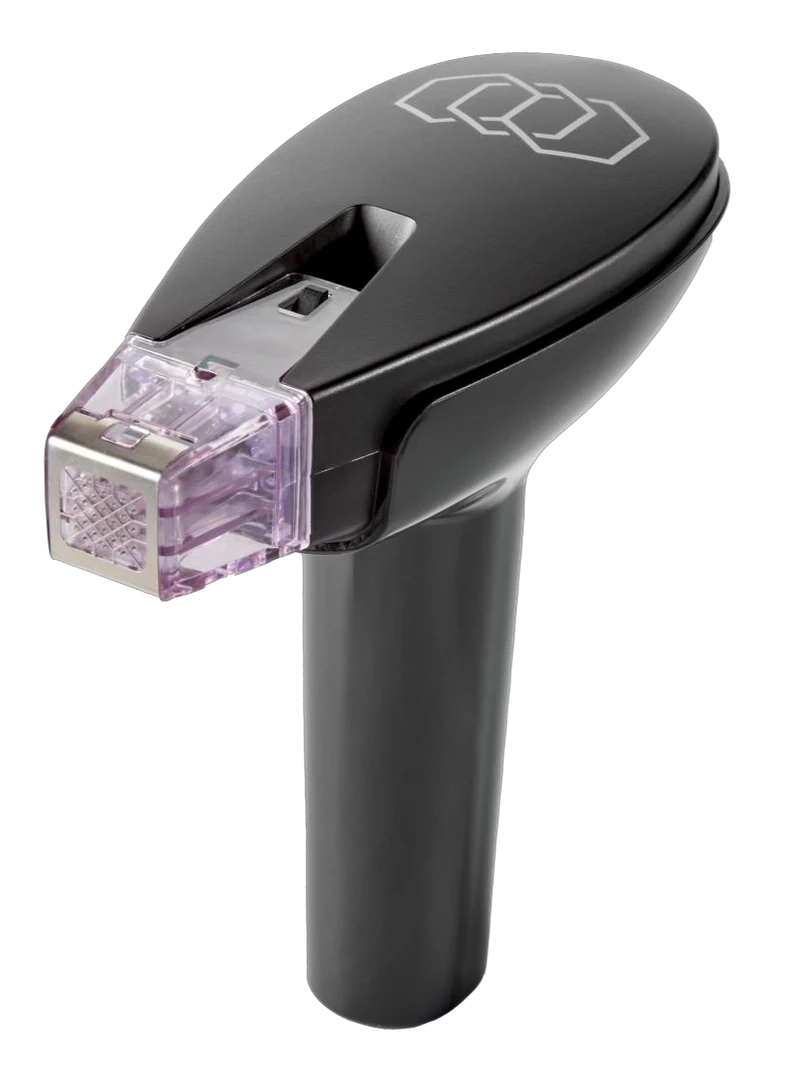
Doctors consider Morpheus8 Burst when energy needs to reach multiple depths in the same area, to address both skin quality and firmness.[2]
Both programmes can address skin quality and firmness. The choice depends on the main concern in each area, as well as the tip, depth, energy and duration of energy delivery.[4]
Monopolar vs Bipolar:
what is the difference?
These two terms describe “the path RF current takes through tissue”, which helps shape the heat that forms around the needles.[4]
Current travels from the needle tip
to a return pad elsewhere on the body
The Monopolar RF used in EXION sends current from the needle tip through tissue, with a return pad placed elsewhere on the body to complete the circuit.[1][4]
Not a picture of anatomy, depth or actual heating zones. Tissue within the circuit does not heat evenly throughout.
Current flows through tissue
between electrodes on the same tip
The Bipolar RF used in Morpheus8 Burst passes current through tissue between electrodes on the same needle tip; the needle arrangement and settings help determine how the energy is distributed.[2][4]
Not a picture of anatomy, depth or actual heating zones. Heat does not necessarily form an even band between the needles.
A system that helps control energy,
with comfort in mind
Beyond its Monopolar RF circuit, EXION also has AI Pulse Control, which reads the tissue’s electrical response and helps adjust energy delivery to the measured values.[3]
Your doctor sets the treatment plan; the system helps control energy delivery. The Single-pass approach covers the target area once in that session, with comfort during treatment in mind.[1][3] This makes EXION one option for uneven texture, acne scars and fine lines, backed by early study data; the number of sessions is tailored to each person’s skin.[3]
Key takeawayYour doctor plans care for your skin quality
using a system that helps control energy delivery,
with comfort during treatment in mind
Energy at multiple depths
in a single needle insertion
Morpheus8 Burst uses Bipolar RF together with Burst and Scale technology, which delivers energy at multiple depths in a single needle insertion, with energy levels set through the system’s settings.[2]
Your doctor can therefore choose where to deliver energy and at what depth, without using the same maximum depth across the whole face, and plan for both skin quality and firmness in the same area.[2]
Key takeawayEnergy at multiple depths
in a single needle insertion
to plan for skin quality and firmness
The difference at a glance
Both programmes are RF microneedling, but they differ in circuit type and system capabilities.[1][2]
| What differs | EXIONFRACTIONAL RF | Morpheus8BURST |
|---|---|---|
| Circuit type | Monopolar RF | Bipolar RF |
| System highlight | AI Pulse Control and a Single-pass approach | Burst / Scale energy at multiple depths |
| Used in planning | Energy delivery controlled by the tissue’s electrical response | Depth levels and the energy delivered at each level |
| Question before choosing | What does each area need, and how will your doctor use each system? | |
This table compares system features. It does not rank results or pain.[1][2][3]
So which programme
will my doctor choose?
Choosing a programme starts with your skin goals, then looks at which device’s capabilities suit the treatment.
Start by finding the cause of uneven texture
Your doctor assesses the cause and the main problem areas, then chooses the treatment tip and energy delivery. EXION is one option doctors consider, because of its energy control system and early study data on acne scars and fine lines.[3]
Try telling your doctor: “I’d like my cheeks to look smoother, especially the marks that show when I wear make-up.”
Assess which depths need care
Doctors consider Morpheus8 Burst when energy needs to reach multiple depths in the treatment area.[2] EXION can also address firmness, so your doctor chooses by the capabilities your plan needs rather than rigidly matching a device name to a concern.[1]
Try telling your doctor: “I’d like my skin to look firmer, and I want to know how each area should be treated differently.”
Talk about what you want to change — and what you already like
For example, smoother cheeks while keeping the fullness of your face, or refining your jawline without changing everything else. The assessment should answer which areas to treat, why, and what to expect from treatment.
Try telling your doctor: “I’d like to look fresher and firmer, but keep the features I like about my face.”
This section helps you prepare questions before your consultation. It is not a quiz that chooses a treatment in place of your doctor’s assessment.
Comfort belongs
in the plan from the start
During RF microneedling you may feel heat, sharp stinging or discomfort in some areas, so numbing preparation and communication during treatment matter. Afterwards there may be temporary redness, swelling or needle marks, and recovery differs from person to person.[1][5]
Before
Our care team talks with you about your goals, concerns and preparation, so we understand each other.
During
Our care team listens to how you feel and talks with you throughout.
After
Our care team explains home skin care and the follow-up in your plan.
At BEHAP, we start with
your skin and your goals
When we recommend a programme, we explain why that approach suits your skin and the goals you want to address — from what we will treat and how it feels, to skin care and follow-up afterwards.

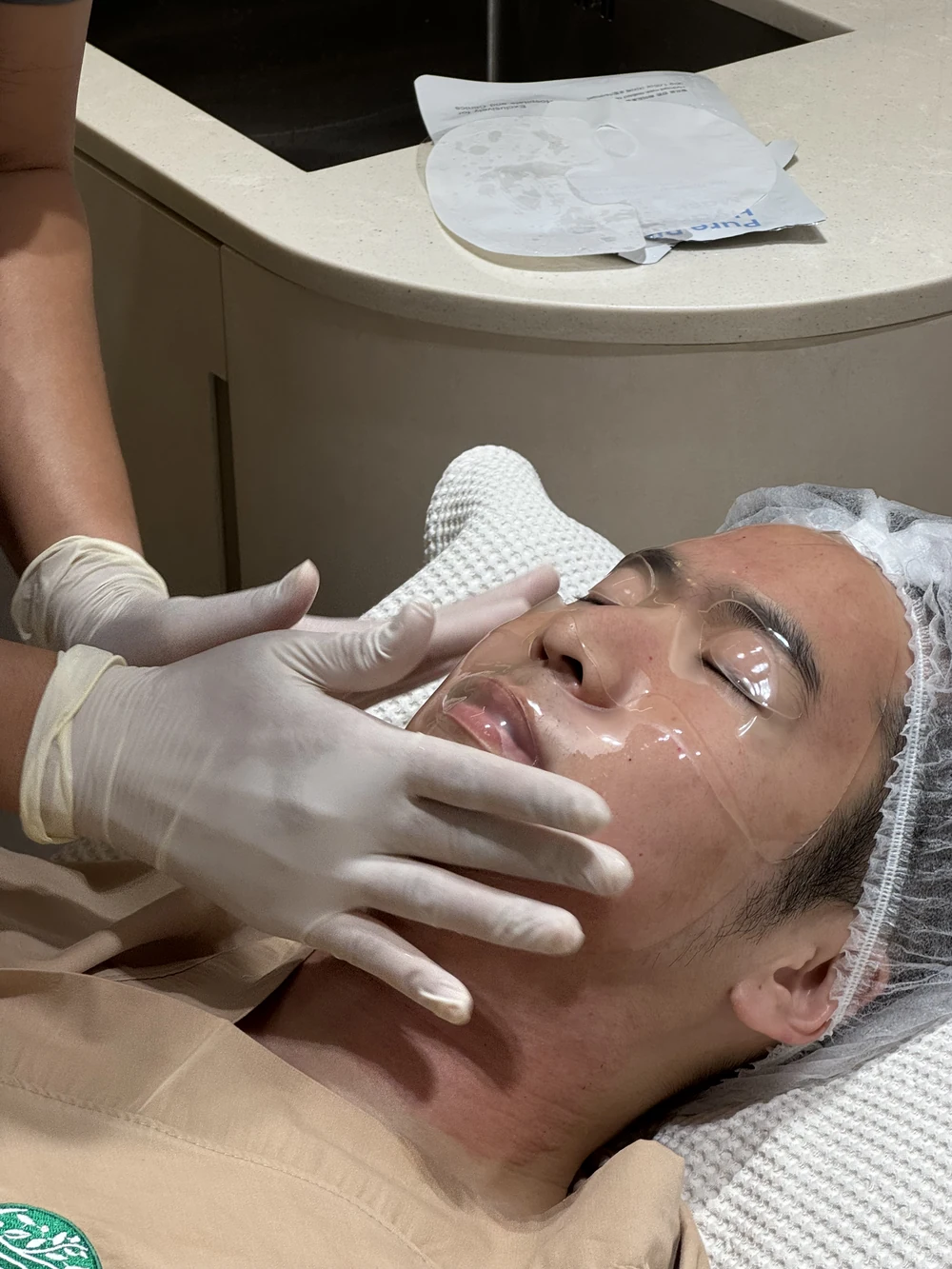
Morpheus8 Burst is available at both BEHAP Asoke and BEHAP Bangna. The Bangna branch is at Cascade Bangna, near Suvarnabhumi Airport. Allow about 1½–2 hours, including time for numbing. See pricing and details on the Morpheus8 Burst programme page. EXION Fractional RF is available at BEHAP Asoke.
Start by telling us
how you’d like your skin to change
Let your doctor help choose the approach that suits your skin and goals.
A plan before treatment. Care after it.
LINE @behapwellness · EXION Fractional RF / Morpheus8 Burst
Results and recovery time vary from person to person. Your doctor will assess suitability and explain the benefits, risks and care before treatment begins.
Frequently asked questions
Do I need to pick a device before my consultation?
No. Tell your doctor your goals, the areas that concern you and what you already like. Your doctor will assess you and explain the options that suit you.
Are EXION Fractional RF and EXION Face the same?
They are different treatment applicators. This article covers the needle-based EXION Fractional RF, not the needle-free EXION Face, so check the applicator name when you read about or book a service.[1]
Does Single-pass mean one session is enough?
No. Single-pass means covering the target area once in that session. The number of sessions in a course and the follow-up period are planned around your skin condition, goals and individual response.[3]
Which is better, Monopolar or Bipolar?
Circuit type alone cannot tell you the result, because the tip, depth, energy and duration of energy delivery also shape the heat that forms. What matters is how your doctor will use energy-delivery control or multi-depth delivery to suit your skin and goals.[4]
References and supporting information
These references are used to check mechanisms and system features, not to rank results between the two devices. Product information and small studies should be read within the limits of each source.
- MANUFACTURER · BTLEXION Fractional RF — product information and treatment experience
Cited for the Fractional RF applicator’s pulse control and Single-pass. Information on Targeted Ultrasound and HA percentages belongs to other applicators, so it is not used to describe Fractional RF effects.
- MANUFACTURER · INMODEMorpheus8 Burst — Bipolar RF, Burst / Scale
Cited for multi-depth energy delivery and energy set by the system’s programming. Indications and system configuration must match the device actually used and its local registration.
- PILOT STUDY · DUNCAN, 2024Novel Approach to Fractional Radiofrequency Microneedling: Optimizing Patient Experience
A small pilot study that used anaesthesia and did not compare EXION with Morpheus8 Burst. The author disclosed a relationship with BTL, so it is not used as evidence that EXION hurts less or performs better than the other device.
- EXPERIMENTAL STUDY · NA ET AL., 2015Electromagnetic Initiation and Propagation of Bipolar Radiofrequency Tissue Reactions via Invasive Non-Insulated Microneedle Electrodes
Scientific Reports 5, 16735 · Cited for circuits and the factors that shape heating. An experimental study that did not compare EXION with Morpheus8 Burst.
- REGULATORY / PATIENT INFORMATION · FDAMicroneedling Devices
General information on microneedling devices, their risks and what to discuss with your provider.
- SAFETY COMMUNICATION · FDA, 15 OCTOBER 2025Potential Risks with Certain Uses of Radiofrequency (RF) Microneedling
A warning about procedures in the RF microneedling category; not used to judge the safety of any particular brand.
- CLINIC · OFFICIAL CONTACTBEHAP — the clinic’s booking page and LINE channel
Used to verify the clinic’s booking page and official contact channels.
Additional safety information
RF microneedling should begin with a suitability assessment and be performed by someone with appropriate knowledge and training. Besides temporary redness or swelling, complications have been reported with certain uses, such as burns, scarring, fat loss and nerve injury. Before treatment, discuss the benefits, risks and alternatives with your doctor.[6]