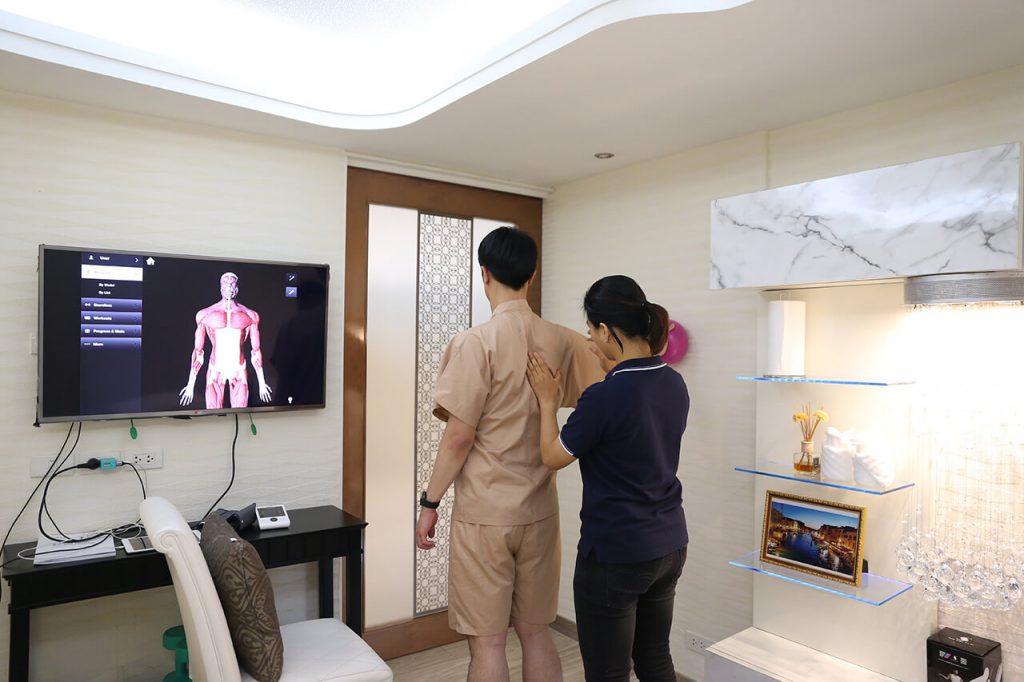
At Behap Wellness, we provide customized physical therapy treatment session for office-syndrome by medical specialist and various medical equipment.
WHAT IS OFFICE SYNDROME
Office Syndrome refers to a group of various symptoms including the pain and soreness in the spine or muscles. These symptoms are caused due to repetitive muscle strain during having long period of unhealthy positions such as sitting in front of a computer screen for several hours.

PHYSICAL THERAPY PROCESS
1. Physical examination to analyze and find out the cause of problems.
2. Identify the cause of problems, explain the diagnosis and then agree on a treatment plan.
3. Start treatment session. The treatment session might include the following tools and techniques: shockwave therapy, ultrasound therapy, execise, joint mobilization and manipulation which is individually designed by the physical therapist.
4. Relaxing with hot bed (If applied).
AFTER PHYSICAL THERAPY
After session should following with rest day to allow you to regain strength and relax outside of physical therapy session.
The pain or soreness experienced after a therapy session is considered a “good” type of pain. The pain or discomfort after a therapy as part of the strengthening process is short-term and clears up for the next 24 to 48 hours.

PHYSICAL THERAPY PROCESS
1. Assessment: Your therapist reviews symptoms, posture, movement, work habits, and factors that may contribute to discomfort.
2. Care plan: The team explains likely contributing patterns and recommends a plan that may include manual therapy, therapeutic exercise, physical modalities, or physician consultation if needed.
3. Treatment session: Treatment may focus on muscle tension, mobility, movement control, and practical strategies for daily activities.
4. Home guidance: You may receive simple movement, stretching, or work-posture guidance to support progress between visits.
5. Follow-up: Progress is reviewed over time so the plan can be adjusted based on your response and goals.
AFTER PHYSICAL THERAPY
Safety note: Physical therapy is not a substitute for urgent medical care. Severe pain, numbness, weakness, trauma, fever, or rapidly worsening symptoms should be checked by a physician.
After your session, your therapist may recommend simple movement, stretching, or work-posture guidance to support progress between visits. Individual response varies, and the plan should be adjusted based on assessment and follow-up.
Technology for physical therapy
Ultrasound
The use of soundwave, typically 0.75-3 MHz to create a thermal and non-thermal effect for musculoskeletal problems, such as chronic lower back pain, muscle strain and joint pain by increasing blood circulation, relaxing muscles and reducing inflammation to enhance the healing process.
Shockwave
The strong vibration wave works by transmitting energy from an applicator to the target tissue. Shockwave therapy can be used for blocking neurogenic inflammation, stimulating blood circulation and the release of growth factor.
Electrotherapy
Reduce pain by blocking the pain signal traveling from your body to your brain.