
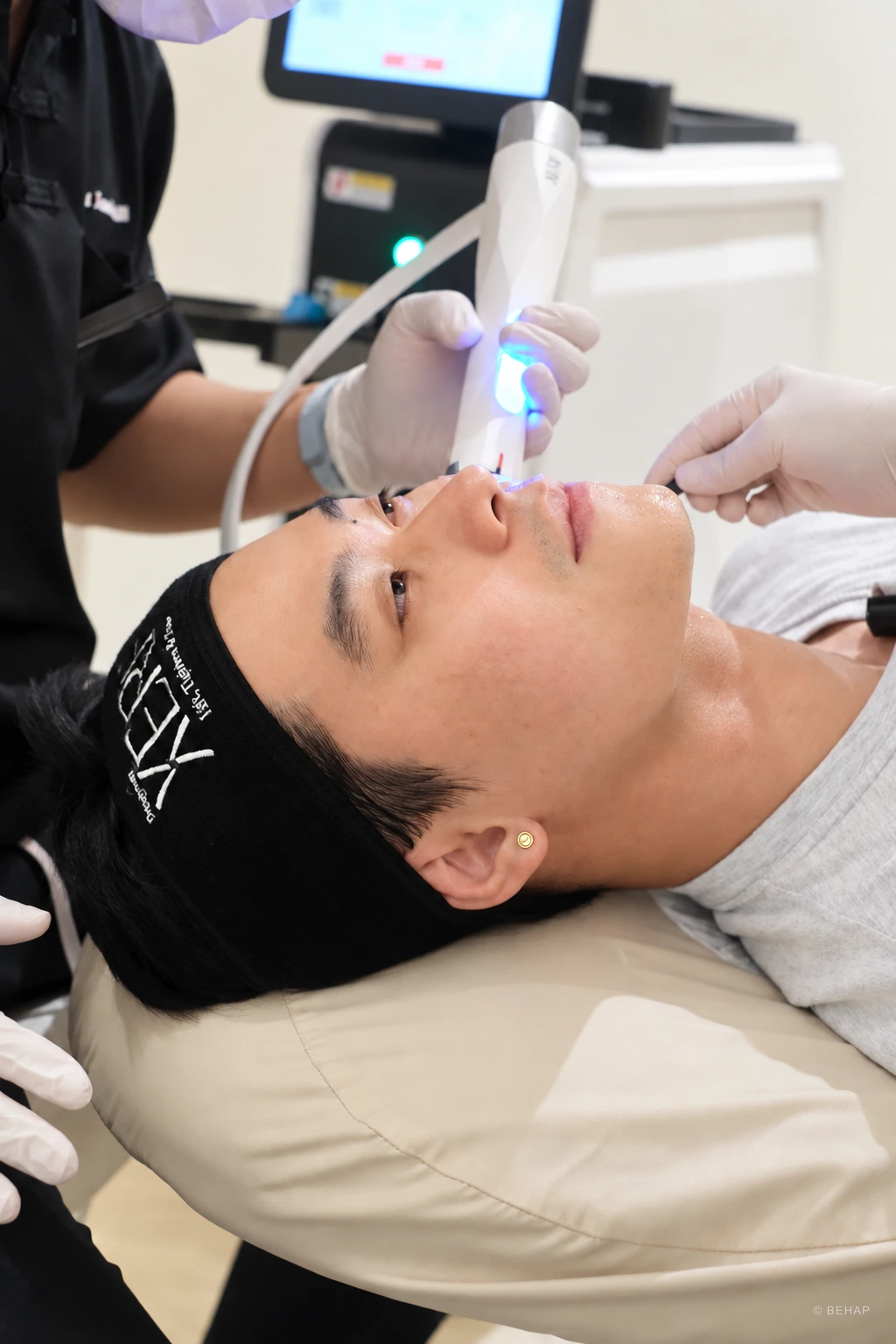
XERF is one of the newer names in non-surgical skin tightening — and one of the most misunderstood. If you have wondered what exactly XERF is, and how it differs from other radiofrequency treatments, here is a clear, doctor-led explanation written to be understood.
In short
- XERF is a dual-frequency monopolar RF device — two frequencies, two depths.
- 6.78 MHz firms the dermis; 2 MHz supports the deep structure and SMAS.
- It is a structural treatment: it realigns and supports facial fat rather than destroying it.
- Best for early-to-moderate laxity; suitability is always confirmed by a doctor.
The starting point
The concern XERF was built to answer
A common worry about radiofrequency is simple: "Will this melt my facial fat and make me look older?" Some conventional RF can reduce fat over time, leaving a hollow look. XERF was designed around exactly this — to tighten and support structure without sacrificing volume.
What it is
So, what is XERF?
XERF is a dual-frequency monopolar radiofrequency platform by Cynosure-Lutronic. It delivers controlled energy that heats tissue to contract existing collagen and stimulate new collagen over the following weeks. What sets it apart is that it uses two frequencies together — each working at a different depth.
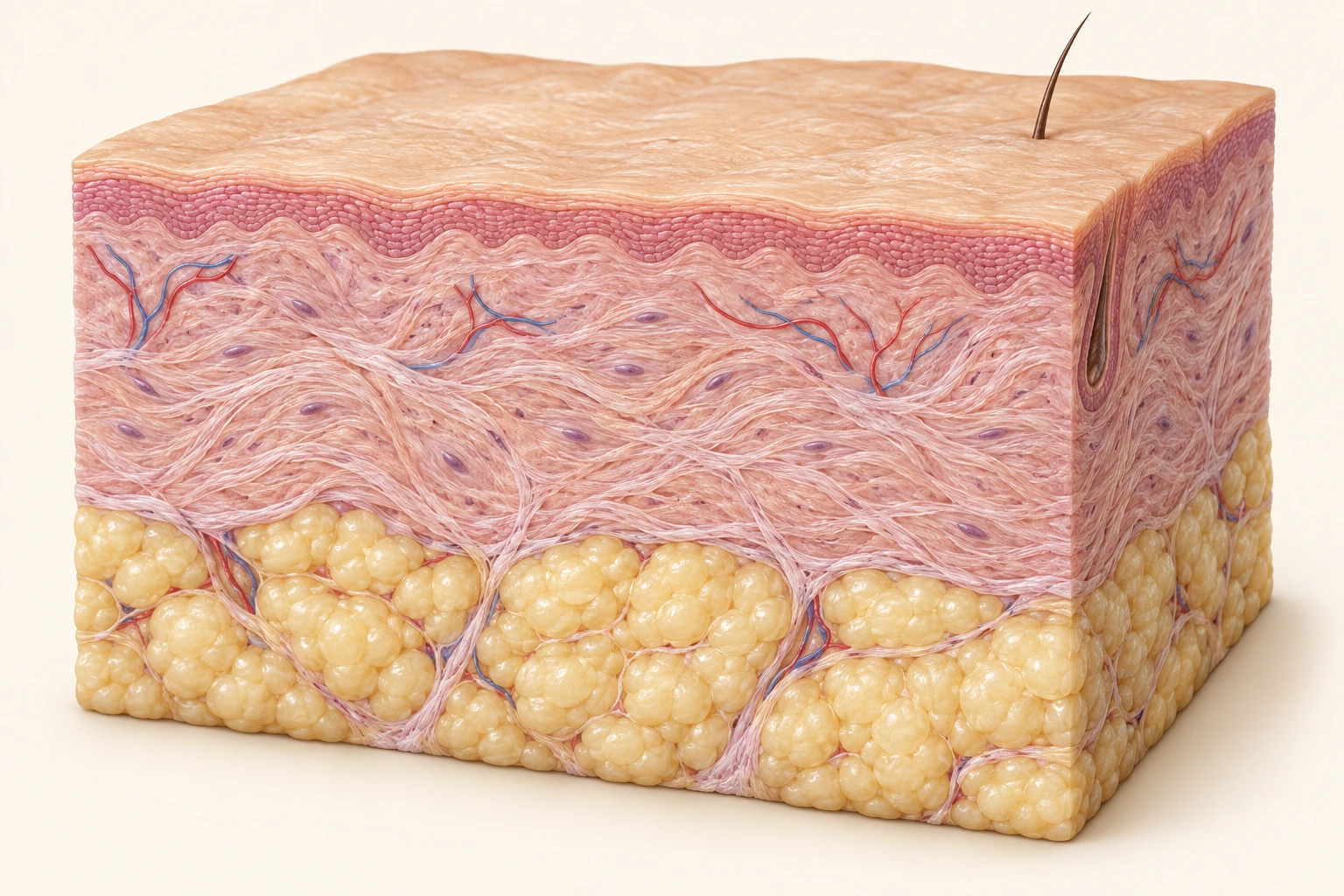
The outer protective layer.
Contains collagen, elastic fibres and cells.
Lies beneath the dermis, in lobules divided by connective tissue.
How it works
Two frequencies, across your skin
In simple terms, 6.78 MHz works in the superficial-to-mid dermis to firm the skin and make pores look smaller. The 2 MHz frequency reaches deeper, to the deep dermis and SMAS, to stimulate longer-term collagen production, support facial structure and reposition fat. Together, the two frequencies address the face layer by layer, rather than only at the surface.

Thick pale-pink bundles provide tensile strength.
Fine gold fibres allow stretch and recoil.
The purple cell produces collagen and other matrix components.
XERF is a structural device — it supports the scaffolding of the face, rather than thinning it.
The key distinction
Structural RF vs fat-reduction RF
Fat-reduction RF aims to reduce fat. XERF works on the structure of the face, supporting the ligaments that anchor fat and repositioning fat compartments rather than destroying them. This makes XERF suitable for people concerned about facial volume loss or hollowing.
Suitability
Who is XERF for?
XERF suits early-to-moderate laxity, softening along the jawline, and anyone seeking tightening without fat loss — including naturally lean faces. It is not a substitute for surgery in significant sagging. Your doctor confirms suitability at consultation.
The science
The science, in brief
XERF delivers two monopolar RF frequencies together, with depth adjustable across shallow, middle and deep modes and contact cooling to protect the surface. In a 2026 technical report, a periorbital protocol used fine "Effector" tips — roughly 100 pulses per side with the larger tip and 50 with the smaller, at energy levels 4–6 — to support brow and upper-eyelid tightening.
| Specification | Detail |
|---|---|
| Frequencies | 6.78 MHz + 2 MHz (dual monopolar RF) |
| Depth modes | Shallow / Middle / Deep — adjustable (~levels 1–10) |
| Surface protection | Built-in contact cooling (ICD) |
| Session | ≈ 45–60 minutes · no downtime |
| Results | Build progressively over 1–3 months |
Laboratory and computational work suggests why two frequencies help: the 2 MHz signal produces broader, deeper heating toward the fat layer, while 6.78 MHz concentrates along the fibrous septa — together driving collagen and elastin remodelling, with no fat-cell destruction reported. These findings are early (computational and animal-model) and await human confirmation, so your doctor's assessment remains the guide.
It helps that we also hydrate the skin before every XERF session — well-hydrated tissue conducts RF more evenly, which supports a comfortable, consistent treatment.
Is XERF safe for both Asian and Western skin?
Monopolar RF is considered suitable for a range of skin types when performed by trained physicians. Suitability is confirmed at consultation.
Does XERF hurt? Is there downtime?
It is generally a comfortable, controlled warmth, with no downtime — makeup is permitted the same day.
How is XERF different from Ultherapy?
XERF is dual-frequency RF working from dermis to SMAS; Ultherapy is focused ultrasound aimed at the SMAS. They can be complementary.
When will I see results?
Results build progressively over 1–3 months. Many patients consider maintenance every 9–12 months. Individual results vary.

Book your XERF consultation in Bangkok
Every plan begins with a structural facial assessment and an honest recommendation — in clear English or Thai. No fixed templates, no pressure.
LINE @Behapwellness · Asoke 096-549-4693 · Bangna 092-391-9466