

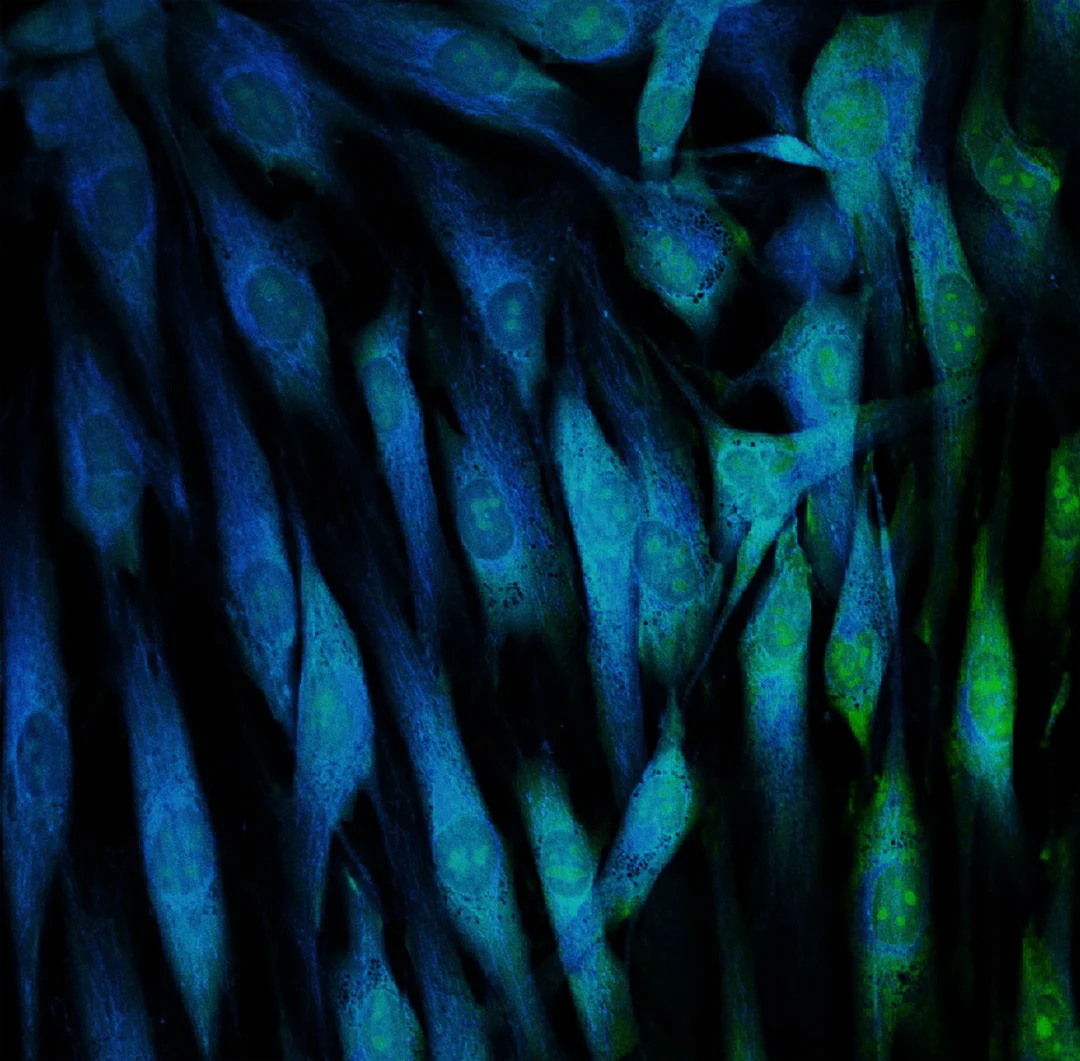
Where is the ECM in skin?
The dermis sits just beneath the outer layer of the skin, the epidermis. It contains cells and the materials they make around themselves. Fibres run through the tissue, with water-holding substances in the spaces between them. Together, they form the extracellular matrix. [1][2]
What do collagen, elastin and hyaluronic acid do?
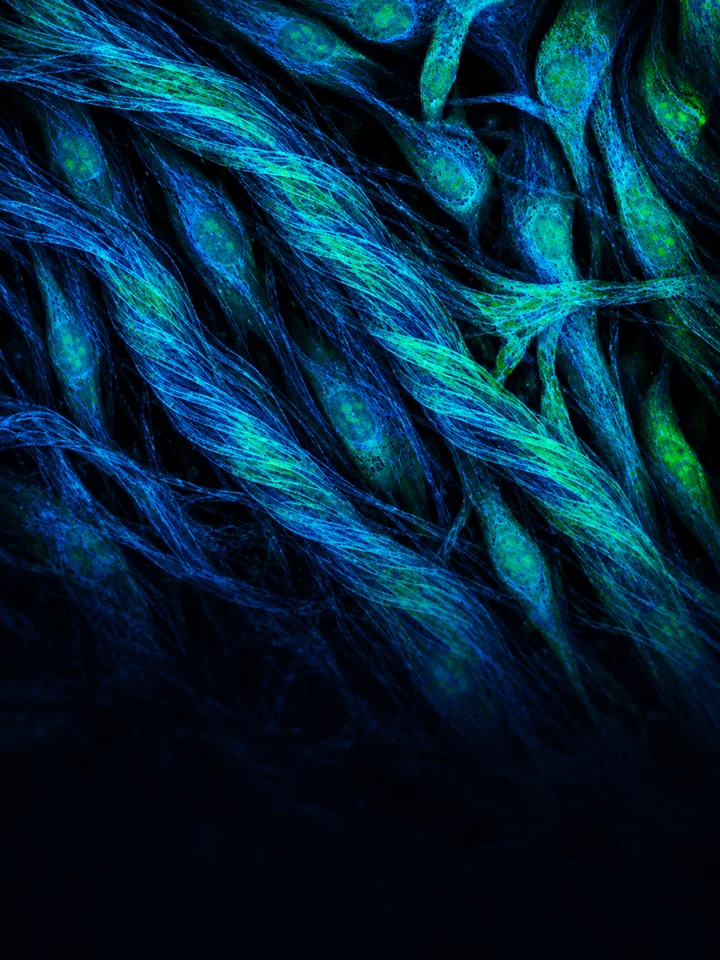
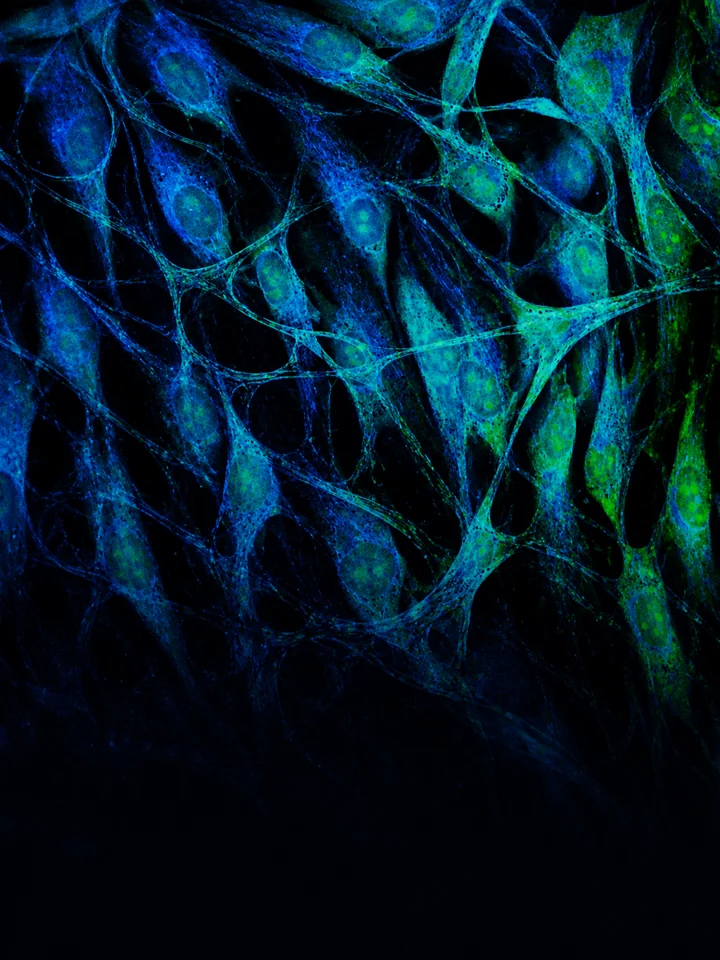

Reference-based illustrations of collagen, elastin and HA. The components are shown out of scale.
| Component | Role in the skin’s matrix |
|---|---|
| Collagen | Its fibres bear tension and help support the structure of the dermis. |
| Elastin | It is part of the elastic fibres that help skin return to shape after stretching. |
| Hyaluronic acid (HA) | It holds water in the tissue, helping maintain hydration between fibres. |
These components share a single network, which also provides places for cells to attach. [1][2]
Who makes and maintains the ECM?
Picture a piece of cloth stretched across a loom. The cloth is the ECM. The threads are collagen and elastin fibres, and the weaver is a fibroblast. These cells in the dermis make components of the matrix and help remodel it when the tissue needs repair. [2][3]
In skin, the weaver and the cloth influence each other. Fibroblasts attach to the matrix around them, and the tension they feel through those attachments affects their shape and activity. When the fibres around them change, so do the conditions in which they work. [2][3]
How does the ECM change as skin ages?
Over time, some collagen fibres break into shorter pieces. Fibroblasts then have fewer places to attach and receive less tension from the surrounding matrix. Research on ageing skin describes how, under these conditions, the cells make fewer matrix components and produce more enzymes that break the matrix down. More fibres can then fragment, much as slack fabric becomes harder for a weaver to mend. [2]
Changes in the ECM help explain why skin develops wrinkles and becomes less able to spring back with age. Cumulative UV exposure also contributes to changes in the structure of the dermis. [2]
How do XERF and PN relate to the ECM?
The matrix includes both the fibres and the environment surrounding the cells. That helps put the research on XERF and PN in context. Each study tells us about a different aspect of the skin.
XERF and skin structure. XERF uses monopolar radiofrequency to generate heat in tissue. The research includes heat models and studies that examine fibres in pig skin. Human studies of XERF assess laxity and skin appearance using clinical photographs. These studies tell us how the skin looked after treatment, while the tissue experiments provide information about the fibres themselves. [4][5]
Read about the benefits and limits of XERF
PN and skin quality. PN stands for polynucleotides. Some human studies of PN-HPT have reported changes in skin hydration and appearance. Research on how PN relates to collagen production by fibroblasts has used cultured cells and animal models. Each type of evidence answers a different question. [6][7][8]
Read the PN guide and the evidence on skin quality
References
- Alberts et al. · The Extracellular Matrix of Animals
- Cole et al. · Extracellular matrix regulation of fibroblast function
- Boraldi et al. · The Role of Fibroblasts in Skin Homeostasis and Repair
- Ko et al. · Computational modeling and histologic analysis of dual-frequency monopolar RF
- Weiss et al. · Human study of XERF
- Teramo et al. · Human study of PN-HPT and skin quality
- Lampridou et al. · Review of PN in aesthetic medicine
- Byun et al. · Laboratory and animal studies of PN