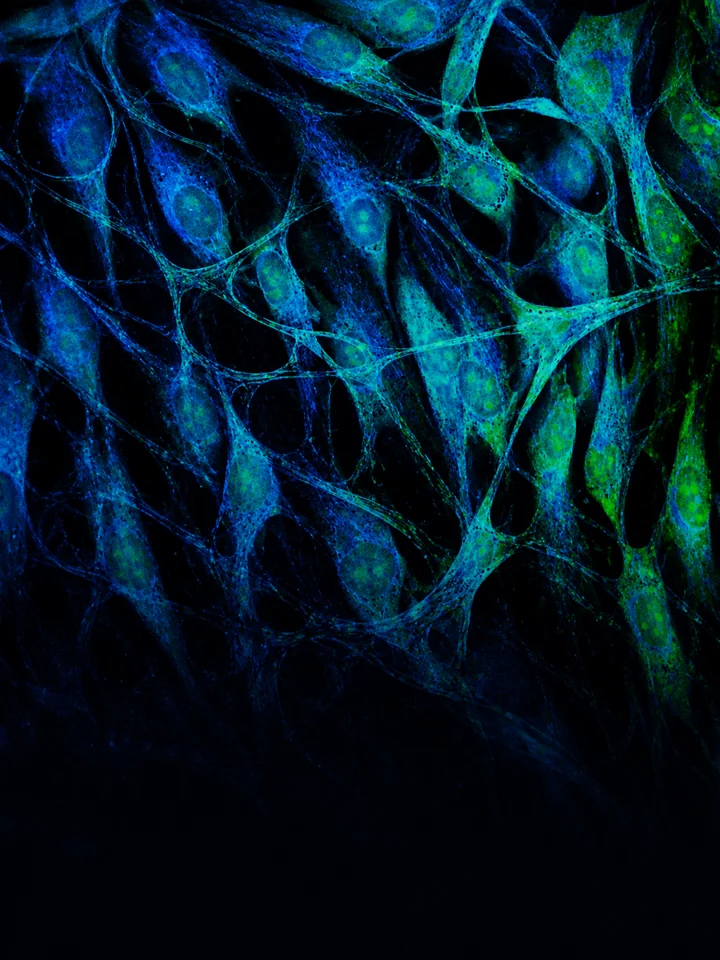


Collagen
Structure
Fibres that help support tissue and provide strength.
THE BEHAP EDIT / SKIN STRUCTURE
The main PN page separates hydration, elasticity and firmness as different aspects of skin. Here, we look more closely at the structures involved and explain the different roles of XERF and PN.
Understand the ECM ↓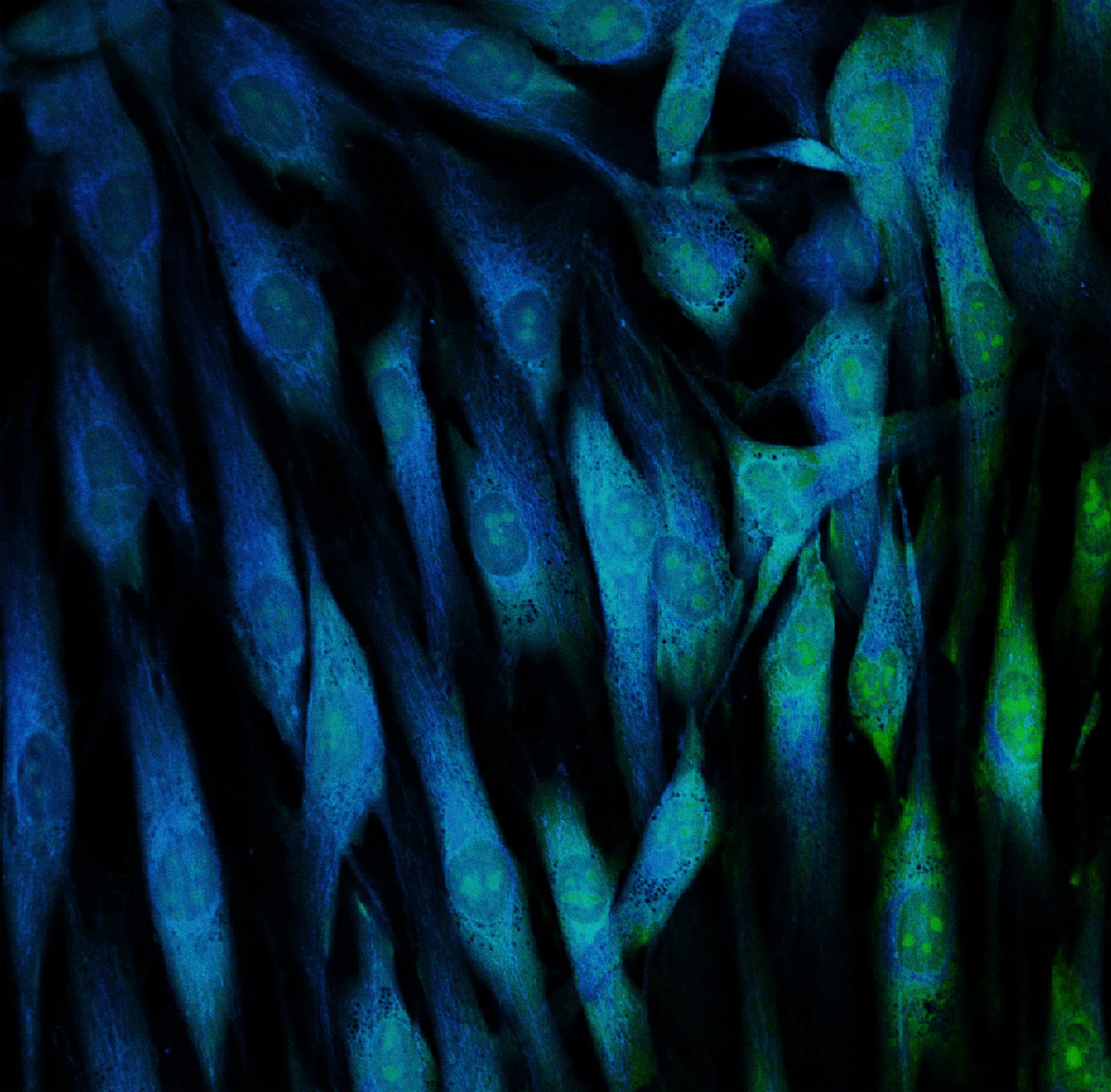 Conceptual imagery from the selected artwork; not a treatment-result image.
01 / THE FOUNDATION
Between skin cells is a network that helps support tissue: the extracellular matrix, or ECM. Collagen contributes strength, elastin helps tissue stretch and recoil, and hyaluronic acid helps retain water. All three are components of this network.
Fibres that help support tissue and provide strength.
Fibres that help tissue stretch and recoil.
Contributes to water retention within tissue.
Conceptual illustrations of collagen, elastin and HA created from a reference image; not treatment results or representations to scale.
If the ECM is the structure supporting the skin, fibroblasts are among the cells that build and maintain it. PN relates both to the environment around these cells and to their activity.
PN can bind water. As it gradually breaks down in tissue, the bound water is progressively released. This helps explain its role in hydration around cells.
In cultured cells, Colangelo and colleagues found that PN supported fibroblast proliferation and viability, alongside increased production of type I and III collagen.
In the same study, researchers observed better-organised collagen fibres in a mouse wound model. This helps explain how PN may be involved in ECM production and organisation.
The connection is support for the cells that build the skin’s structure. These findings on collagen production and organisation come from laboratory and animal studies; effects on human skin should be assessed using clinical research on the chosen product.
Read the original study: Colangelo et al. (2021) ↗02 / A SKIN-QUALITY CONCEPT
Here, “ECM Reset” means taking a fresh look at which aspects of your skin need attention: structure, elasticity and hydration. It does not mean replacing the entire ECM with new skin. With the goals clear, you can consider an approach for each.
03 / DIFFERENT ROLES, ONE PLAN
XERF uses radiofrequency energy to generate heat in tissue and targets skin tightening. Device research has examined heat distribution and tissue features involving collagen and elastic fibres.
Research ↗PN is a category of injectable skin-quality products. The formulation should match the treatment area. For Vitaran and Plinest in this collection, the manufacturers describe uses related to skin hydration and elasticity.
Mastelli ↗ · BR PHARM ↗If both firmness and skin quality concern you, a clinician can consider XERF and PN within one plan, explaining the role of each. Whether to combine them, which comes first and how far apart to schedule them depend on the products, areas and your assessment. Research on each approach does not establish that combining them is better than either alone.
04 / READ THE EVIDENCE
When reading about PN, you will often encounter PDRN too. Their findings cannot be applied interchangeably to every formulation. For example, the study cited here on the A2A receptor—a signalling receptor protein—investigated PDRN. For a PN product’s effects, look at research on its actual formulation to understand which findings are relevant to the programme you are considering.
PDRN / A2A research ↗05 / YOUR PLAN
Identify whether you want to address firmness, hydration or skin texture before choosing an approach.
If XERF and PN are proposed together, ask what each is intended to address, which comes first and how the sessions will be spaced.
Agree on which changes to track, using comparable photographs and assessments, then consider whether to continue or adjust the plan.
This content provides general information. Results vary between individuals. Suitability and the treatment plan should be assessed before treatment.